Talk to our expert
+91 9822207761
Connect via
WhatsApp
Luxury Rehab|Book Appointment
Raha|Case Study|Blog|Gallery|Career
Jagruti LogoJagruti Rehabilitation Center
About Us
About Jagruti
Mission & Vision
News and Media
Testimonials
Treatments
Alcohol Addiction Treatment
ADHD Treatment
Agoraphobia Treatment
Anorexia Nervosa Treatment
Autism Spectrum Treatment
Bipolar Disorder Treatment
Borderline Personality Disorder
Bulimia Nervosa Treatment
Cocaine Treatment
Depression Treatment
Delusional Treatment
Dissociative Identity Treatment
Generalized Anxiety Disorder
Heroin Treatment
Mania Treatment
Marijuana Treatment
OCD Treatment
Oppositional Defiant Disorder
Phobia Treatment
Panic Treatment
Post-Traumatic Treatment
Personality Treatment
Schizophrenia Treatment
Schizoaffective Disorder Treatment
Social Anxiety Disorder Treatment
Disorders
Addiction
Antisocial Personality Disorder
Avoidant Personality Disorder
Anxiety Disorder
Acute Stress Disorder (ASD)
Adjustment Disorder
Anorexia Nervosa
Autism Spectrum Disorder
Attention-Deficit/Hyperactivity Disorder
Biophysical Addiction
Bipolar Disorder
Borderline Personality Disorder
Body Dysmorphic Disorder
Bulimia Nervosa
Binge Eating Disorder
Conversion Disorder
Conduct Disorder
Depression
Dementia Care
Delusional Disorder
Dysthymia
Developmental Coordination Disorder
Dissociative Amnesia
Depersonalization /Derealization Disorder
Dissociative Fugue
Disruptive Mood Dysregulation Disorder
Excoriation Disorder
Factitious Disorder
Generalized Anxiety Disorder
Histrionic Personality Disorder
Hoarding Disorder
Hypochondriasis
Intellectual Disability (ID)
Insomnia Disorder
Kleptomania
Major Depressive Disorder
Narcissistic Personality Disorder
Narcolepsy
Obsessive Compulsive Disorder
Obsessive-Compulsive Personality Disorder
Oppositional Defiant Disorder (ODD)
Pornography Addiction
Paranoid Personality Disorder
Panic Disorder
Phobias
Post-Traumatic Stress Disorder
Pica
Parasomnias
Pyromania
Restless Legs Syndrome
Schizophrenia
Schizoid Personality Disorder
Social Anxiety Disorder
Schizoaffective Disorder
Seasonal Affective Disorder (SAD)
Selective Mutism
Schizotypal Personality Disorder
Somatic Symptom Disorder
Trichotillomania
Therapies
Acceptance and Commitment Therapy
Aversion Therapy
Applied Behavior Analysis
Art Therapy
Accelerated Experiential Dynamic Psychotherapy
Adlerian Therapy
Acupuncture Therapy
Adjuvant Therapy
Animal-assisted Therapy
Ayurvedic Therapy
Behavioral Therapy
Bibliotherapy
Biofeedback Therapy
Brief Therapy
Cognitive Behavioral Therapy
Couples Therapy
Critical Incident Stress Management (CISM)
Client-Centered Therapy (Person-Centered Therapy)
Dialectical Behavioral Therapy
Dance Therapy
Detoxification
Existential Therapy
Expressive Arts Therapy
Electroconvulsive Therapy (ECT)
Eye Movement Desensitization and Reprocessing (EMDR)
exposure therapy
Family Systems Therapy
Family Therapy
Gestalt Therapy
Group Therapy
Humanistic Therapy
Holistic Therapy
Hypnotherapy
Interpersonal Therapy
Integrative Therapy
Ketamine Assisted Psychotherapy
ketamine therapy
Motivational Enhancement Therapy
Mindfulness-Based Cognitive Therapy
Music Therapy
Mind Body Therapy
Multisystemic Therapy (MST)
Neurofeedback Therapy
Narrative Therapy
Naturopathic Therapy
Psychodynamic Therapy
Play Therapy
Psychotherapy
Physical Therapy (PT)
Problem-Solving Therapy
Rational Emotive Behavior Therapy
Repetitive Transcranial Magnetic Stimulation
Reiki Therapy
Solution-Focused Brief Therapy
Somatic Experiencing
Support Groups
Spiritual Counseling
Trauma Therapy
Traditional Chinese Medicine (TCM)
Yoga Therapy
Our Centers
Mumbai
Pune
Navi Mumbai
Bangalore
Noida
Gurgaon
Ahmedabad
Chennai
Hyderabad
Nashik
Thane
Facilities
Living Conditions
Dedicated Caring Staff
Doctors

Jagruti Rehabilitation Centre

Jagruti Rehabilitation Centre
Where Healing Begins

  • Phone : +91 9822207761

  • Email : info@jagrutirehab.org

x
x
x
x
xAroha Logo
xOlive Logo

Treatments

  • ADHD Treatment
  • Alcohol Addiction Treatment
  • Bipolar Disorder
  • Depression Treatment
  • Mania Treatment
  • OCD Treatment
  • Phobia Treatment
  • Schizophrenia

Disorders

  • Anxiety
  • Bipolar
  • Depression
  • Dementia Care
  • OCD
  • Panic
  • Paranoid Personality
  • Schizophrenia

Locations

  • Ahmedabad
  • Bangalore
  • Chennai
  • Gurgaon
  • Hyderabad
  • Mumbai
  • Navi Mumbai
  • Noida
  • Pune

Other Links

  • Blog
  • Careers
  • Case Study
  • Contact Us
  • FAQ
  • Gallery
  • News & Media
  • Our Doctors
  • Vision

Quick Enquiry

Phone
©️ 2026 Jagruti Rehab Centre. All Rights Reserved.
Privacy Policy | Terms & Conditions | Sitemap | Robots
Repetitive Transcranial Magnetic Stimulation (rTMS)
  1. Home
  2. Therapy

  3. repetitive transcranial magnetic stimulation rtms

Repetitive Transcranial Magnetic Stimulation (rTMS)
What is rTMSWhy Is rTMS Used?How Does rTMS Work?Side effects & complications of rTMS?What are the costs of rTMS?Who should avoid rTMS?
Navi Mumbai Rehab Centre

Navi Mumbai

Plot no 37, Sector 5, Siddhi Vinayak, Taloja Phase 1, Navi Mumbai, Maharashtra 410208

Pune Rehab Centre

Pune

Farm, Zhagade Wasti, Near Loni Toll Naka, Solapur - Pune Hwy, Manjri, Hadapsar, Pune, Maharashtra 412307

Noida Rehab Centre

Noida

B-17, B Block, Sector 30, Noida, Uttar Pradesh 201301

Mumbai Rehab Centre

Mumbai

Malad East, Mumbai, Ahead Fatima Devi School, Railway Station, Sushmita Building, Manchubhai Road, Near, Malad Subway, Malad East, Mumbai, Maharashtra 400097

Ahmedabad Rehab Centre

Ahmedabad

B24, Greenwood, Garden City, Sardar Patel Ring Rd, Vibhag 1, OGNAJ, Ahmedabad, Gujarat 380060

Bangalore Rehab Centre

Bangalore

Sy no: 30/10, Yelahanka Hobli, Nagadasanahalli, Bengaluru, Karnataka 560064

Gurgaon Rehab Centre

Gurgaon

Plot no 596, Sector 42, Gurugram, Haryana 122009

Chennai Rehab Centre

Chennai

944, 17th Main Rd, Sector H, Thirumoolar Colony, Anna Nagar, Chennai, Tamil Nadu 600038

What is Repetitive Transcranial Magnetic Stimulation?

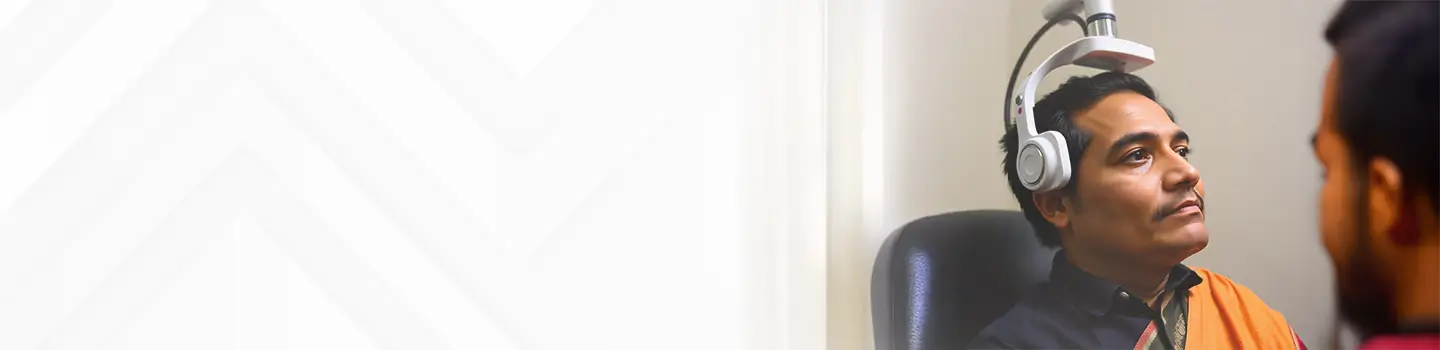
Repetitive Transcranial Magnetic Stimulation (rTMS) is a non-invasive, drug-free, and tolerable technique that explores cognitive functions. rTMS therapy is also particularly effective in learning the brain-behaviour relationship.
This therapy has proven to be effective for treating various neuropsychiatric disorders, as it can target and modulate certain specific regions of the brain. The excitability of neurones can be selectively controlled in discrete regions of the brain. This way, the slow-working or aggressively working parts of the brain can be restored to their natural speed.
Read on to learn more about rTMS therapy​, why rTMS is used, how rTMS works, and what the possible side effects and complications of rTMS are.

rTMS vs. ECT

Repetitive Transcranial Magnetic Stimulation (rTMS) and Electroconvulsive Therapy (ECT) are brain-stimulating treatments for psychological disorders.
However, repetitive transcranial magnetic stimulation (rTMS) does not require anaesthesia, as it is a non-invasive procedure. It uses magnetic impulses and targets specific areas. ECT, however, uses electric currents after a patient has been administered general anaesthesia, as the procedure causes brief seizures.
Repetitive Transcranial Magnetic Stimulation (rTMS) is generally used to treat depression, but ECT treats more severe disorders and is the last resort for those patients who are unresponsive to other therapies.
Why Is rTMS Used?

Repetitive Transcranial Magnetic Stimulation (rTMS) is mostly used for treating depression when conventional methods prove to be ineffective. This therapy is also helpful for patients belonging to the age group 18 to 70.
This is highly recommended to those who cannot opt for electroconvulsive therapy due to various other health conditions. Patients suffering from depression, anxiety, and even schizophrenia, among other problems, have felt better after getting treated with this therapy.
However, experts are trying to administer this therapy for people who are suffering from compulsive disorders, chronic pains like migraines, stroke rehabilitation, and many more. The results have been positive in most cases.

How Does rTMS Work?

A complete pre-treatment and post-treatment procedure is followed to minimise the risk of side effects. Here is how rTMS therapy works:

  • Before Treatment
    The first step of rTMS therapy is the “mapping” process. This determines the optimal placement of the electromagnetic coil and the dose of magnetic energy to be given to the patient. Healthcare providers give earplugs to patients to minimise any discomfort.
    Once the coil is placed on the head, stimulation pulses create a tapping sensation. This coil identifies the spot that causes movement in your fingers, followed by determining the “motor threshold,” i.e., the least amount of energy required to create a consistent movement in thumbs or fingers.
  • Treatment
    Once the medical professional performing the procedure has analysed the medical history, the main treatment starts. Electromagnetic coils are placed on the head at a predetermined position. Earplugs must be worn at all times as the rapid tapping sensation can be uncomfortable for the patient.
    The duration of the treatment varies based on the stimulation pattern. Pauses are taken at regular intervals to ensure that the treatment does not feel overwhelming to the patient. The duration of the session depends on the severity of the problem. However, on average, patients usually require 20-30 sessions of 30 minutes each. The procedure can be safely repeated twice daily.
  • Post-Treatment Sessions
    Patients can resume their routine after every rTMS therapy session. Side effects like temporary headaches or mild scalp tenderness dissipate after some time. Since it is a non-invasive procedure for managing neuropsychiatric conditions, there is not much after-treatment care required.

What are the possible side effects and complications of rTMS?

rTMS therapy side effects are not observed among many patients because it is a non-invasive procedure. However, sometimes people suffer from mild headaches, occasional face twitching, and lightheadedness. Patients who do not use earplugs might experience seizures or even temporary loss of hearing. Patients suffering from severe bipolar disorders might also experience episodes of mania.

What are the costs of rTMS?

Charges of repetitive transcranial magnetic stimulation (rTMS) depend on the number of sessions and the deterioration of the mental health of a person. However, the total costs range somewhere between Rs 60,000 and Rs 75,000.

Who should avoid rTMS?

rTMS therapy should be avoided by people who have mental implants or any metal device in their heads. Aneurysm clips, braces, shrapnel, pacemakers, etc., can be dangerous. Patients must inform the professional medical practitioner about any kind of invasive procedures performed on them before opting for repetitive transcranial magnetic stimulation (rTMS).

Frequently asked questions

What is repetitive transcranial magnetic stimulation (rTMS)?

rTMS therapy is a non-invasive brain stimulation therapy. The procedure uses magnetic fields to stimulate the nerve cells. The procedure primarily treats severe depression by targeting specific regions. This regulates mood and behaviour and improves overall neurological functioning without any anaesthesia.

What conditions can rTMS treat effectively?

Repetitive Transcranial Magnetic Stimulation (rTMS) has effectively treated patients suffering from multiple bouts of depression. However, the treatment is also administered to patients suffering from various types of compulsive disorders, eating disorders, and schizophrenia, among others.
Is rTMS a safe treatment option?

Yes. Repetitive Transcranial Magnetic Stimulation (rTMS) is a safe treatment option, provided the patient does not have any metal object, like a stent, braces, etc., inside him or her. Patients must share their complete medical history with the mental health professional before agreeing to the procedure.
How is rTMS different from electroconvulsive therapy (ECT)?

Repetitive Transcranial Magnetic Stimulation (rTMS) is a non-invasive procedure in which specific brain areas are targeted with magnetic impulses. ECT, on the other hand, is performed by giving short seizures to patients without selecting a specific region of the brain.
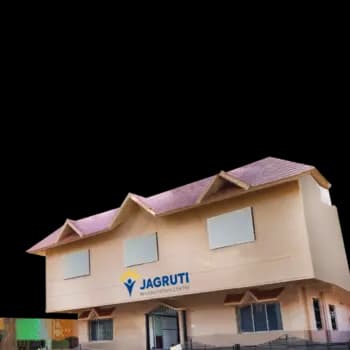
Why Choose Jagruti Rehab for Repetitive Transcranial Magnetic Stimulation (rTMS)?

Jagruti Rehab is a good rehab centre for repetitive transcranial magnetic stimulation (rTMS) as it is performed by experienced mental health experts. The medical history of a patient is thoroughly analysed, and post-treatment care is provided to patients at the facility.