

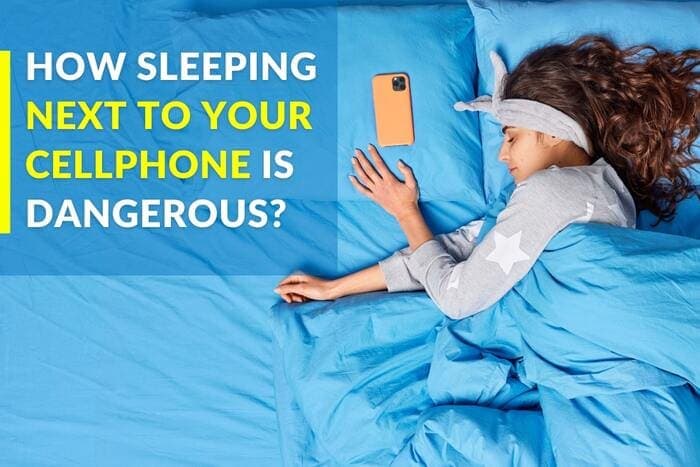
According to a Pew Research Center survey — cited in a 2025 study published in the Journal of Medical Internet Research — 65% of smartphone users worldwide keep their phones on or near their beds while sleeping, a figure that rises to 90% among teenagers.[1] Sleeping with a phone impacts sleep quality through both time displacement and blue light exposure. Smartphones produce blue light which can disrupt the natural sleep cycle. According to Harvard Medical School, blue light suppresses melatonin production for twice as long as other types of light, making it significantly harder to fall and stay asleep.[2] Melatonin is a sleep-regulating hormone, and its suppression can cause sleep disorders. Additionally, there are health concerns around radiofrequency (RF) radiation emitted by mobile phones. This blog will discuss how sleeping with your phone can damage your body's natural rhythms, and provide expert tips from Jagruti Rehabilitation Centre in Delhi on how you can sleep well.
Cell Phone Radiation Effects On Human Body
Here is how mobile phone radiation influences the body:
1. Thermal Effects
Cell phones emit radiofrequency (RF) radiation, which can slightly warm your body's tissues. According to the National Institutes of Environmental Health Sciences (NIEHS), this is a form of non-ionising radiation — it does not carry enough energy to break chemical bonds, and the heating effect remains minimal at normal usage levels.[3]
2. Possible Risk of Cancer
The WHO's International Agency for Research on Cancer (IARC) classified radiofrequency electromagnetic fields as "possibly carcinogenic to humans" (Group 2B) in 2011, based on limited evidence of an increased risk of glioma — a malignant type of brain tumour — among heavy mobile phone users. This classification means a causal link cannot be definitively ruled out, but the evidence is not yet strong enough to confirm it.[4]
3. Sleep Problems
Using your phone in the evening directly impacts sleep. Harvard Medical School researchers found that blue light from screens suppresses melatonin for twice as long as green light of comparable brightness and shifts circadian rhythms by twice as much — delaying the body's natural signal that it is time to sleep.[2]
4. Changes in Brain Activity
Prolonged phone use held close to the head can produce slight, transient changes in brain activity. However, current scientific consensus notes these changes are short-term and more research is needed to understand long-term effects.[3]
5. Fertility Problems
A 2021 systematic review and meta-analysis published in Environmental Pollution found that mobile phone RF-EMR exposure suppresses sperm motility and viability and reduces sperm density — suggesting that carrying phones in trouser pockets for extended periods may negatively affect male fertility.[5]
6. Electromagnetic Hypersensitivity (EHS)
Some individuals report symptoms such as headaches, fatigue, and dizziness near mobile phones. However, as the IARC and WHO both note, science has not yet established a direct causal relationship between such symptoms and RF radiation exposure.[4]
Can Sleeping with Your Phone Make It Difficult to Fall Asleep?
Yes, using a cell phone just before bed does not give your body and mind enough time to relax. Whether it is a text chat, social media scrolling, or a binge-watching session, engaging with your phone keeps your brain in an alert state. If your phone is not near you when you try to relax and sleep, you will not be tempted to reach over and start scrolling mindlessly.
Why Does Sleeping with Your Phone Make It Difficult to Fall Asleep?
Using your phone before bedtime exposes you to blue light and disturbs your body's natural sleep-wake cycle — the circadian rhythm. According to Harvard Medical School's Division of Sleep Medicine, blue light suppresses melatonin more powerfully than almost any other wavelength of light, pushing the body's internal clock to a later schedule and delaying sleep onset.[2] Our circadian rhythm is closely synchronised with the natural sunrise and sunset cycle, meaning our bodies automatically know when to wake up and when to wind down. However, when you scroll through your phone at night, the blue light and frequent notifications disrupt this natural process. Over time, this leads to drowsiness, sleep deprivation, and mental exhaustion the following day.
How Harmful Is the Radiation from Your Phone?
According to the NIH National Institute of Environmental Health Sciences, mobile phones operate via radiofrequency (RF) radiation — a form of non-ionising radiation that does not damage DNA directly the way ionising radiation such as X-rays does.[3] The known biological effect of this radiation is tissue heating — when you hold your phone to your head for a call, surrounding tissues can warm slightly. Regulatory agencies including the WHO and FCC set strict SAR (Specific Absorption Rate) limits to ensure these heating effects remain within safe levels.
Practical Tips to Improve Your Sleep Quality
Place Your Phone Away from the Bedroom :Do not sleep with your phone beside your bed. Charge it in a different room such as the kitchen. That way, you will not be tempted to check it while trying to sleep.
Use an Alarm Clock :Purchase a small alarm clock instead of relying on your phone. Phones are distracting, and it is best to have them out of reach at night.
Make Your Bedroom a Calm Place :Establish a calm environment for sleeping. Ensure your bed is comfortable, the room is quiet, and the lights are low. This helps your body recognise it is time to sleep.
Designate a Relax Time Before Bed :Try to stop using screens at least 1 hour before sleep. Use that time to read a book, listen to calm music, or sit quietly. This allows your mind to slow down and prepare for rest.


