

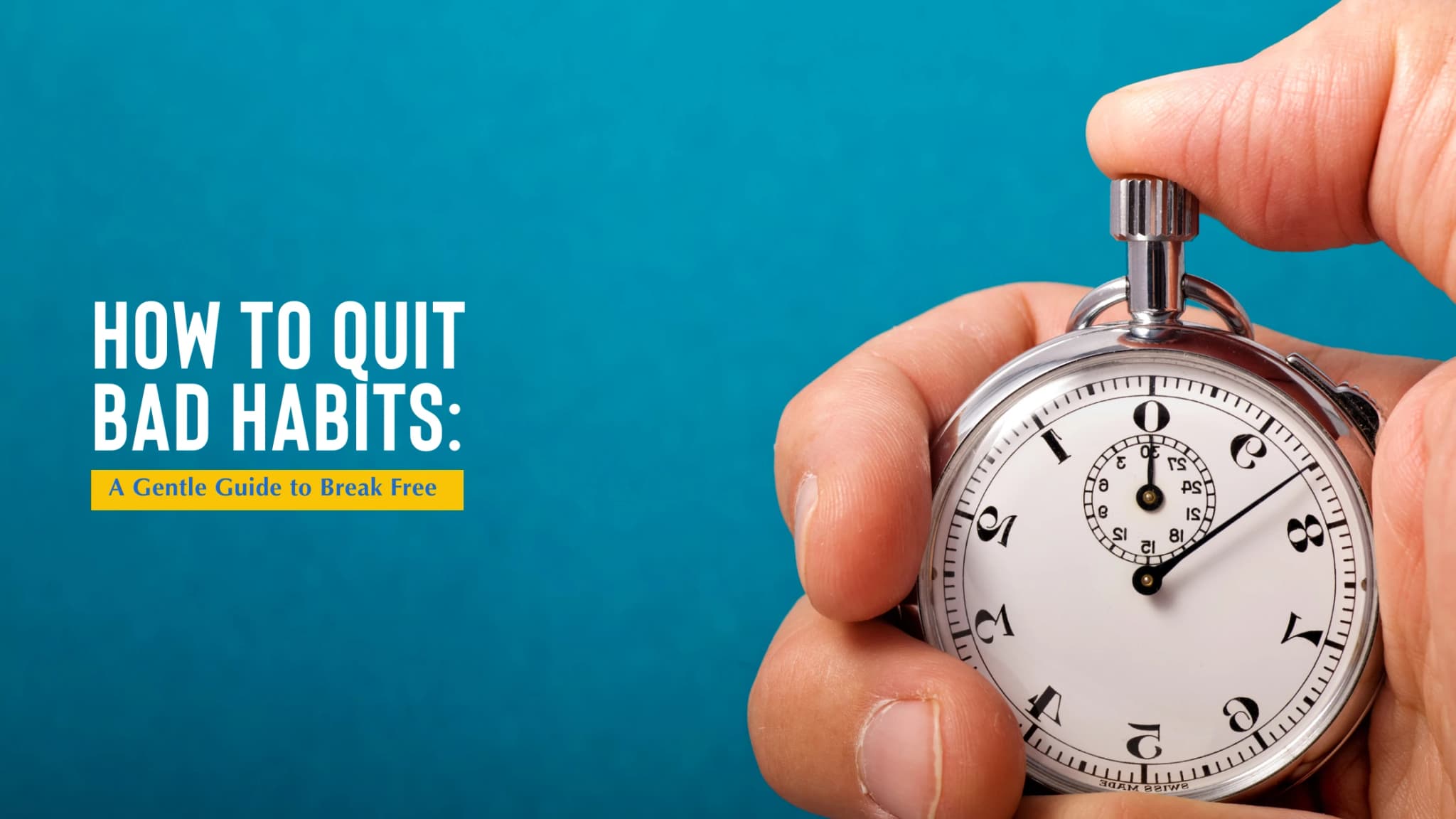
We all have habits; some serve us well, while others quietly pull us away from our best selves. Whether it's endless nail-biting, overeating, smoking, or procrastination, bad habits often have lasting effects on various aspects of a person's well-being. If you're wondering how to quit bad habits, you're not alone.
While these habits may offer temporary relief or satisfaction, they often lead to long-term consequences such as stress, poor health, and reduced overall well-being. According to the World Health Organization (WHO), unhealthy behaviours such as tobacco use contribute to more than 8 million deaths worldwide each year, highlighting the serious long-term impact that harmful habits can have on health. [1]
How to Start Breaking Bad Habits - Methods and Techniques
Breaking bad habits isn't just about willpower and self-awareness. It's a process, not a one-time fix, so you have to be patient and self-compassionate. Here's how to begin:
1. Build Awareness: Know Your Triggers
Want to know how to overcome bad habits? Start by becoming aware of your triggers. This involves identifying the situations, emotions, people, or times that trigger the unwanted behaviour. Then, try to eliminate these triggers or, if that's not possible, learn to manage when and why this is happening. Keep a simple journal for a few days, jotting down what you were doing, how you felt, and what triggered the habit. Behavioural research suggests that self-monitoring and identifying behavioural triggers significantly improve the likelihood of successful behaviour change. [2]
2. Replace, Don't Erase
Quitting bad habits doesn't have to be complicated. Rather than trying to overwrite or erase the whole habit, you keep the trigger and reward but swap the routine. It's so simple yet incredibly powerful. Trying to simply "stop" a habit without a replacement usually leaves a gap, and gaps pull us right back. Instead, choose a healthy alternative. If stress triggers you to indulge in an evening snack, replace that moment with deep breathing exercises or a short walk. If boredom leads to scrolling social media, try picking up a book or calling a friend. Research on behaviour change suggests that replacing an unwanted routine with a healthier alternative is generally more effective than relying on willpower alone. [2]
3. Make the Bad Habit Harder to Do
To make a bad habit harder to maintain, modify your environment to reduce temptation and make unhealthy behaviours less convenient. Replace it with a new habit, and modify your environment to reduce temptation. Breaking bad habits is a process, so be patient and persistent, and consider seeking support from friends, family, or professionals. If you want to cut back on junk food, don't keep it in the house. If social media wastes your time, delete the apps or turn off notifications. Creating small barriers forces your brain to pause, and in that pause, you get a chance to make a better decision. Environmental changes that reduce exposure to unhealthy cues have been shown to improve long-term behaviour change and habit formation. [2]
4. Start Small with the 2-Minute Rule
The 2-minute Rule is a simple productivity technique that encourages you to start new habits with an action that takes less than two minutes. Small, consistent actions are easier to maintain and help build momentum for long-term behaviour change. Want to start exercising? Begin with just two minutes of stretching each day. Research on habit formation shows that repeating small behaviours consistently increases the likelihood of them becoming automatic over time. [3]
5. Bundle New Habits with Things You Love
Another effective strategy is bundling new habits with activities you already enjoy. "Bundling" new habits with enjoyable activities, or "habit stacking," is a strategy that influences existing routines to make adopting new behaviours easier. Or if you want a new behaviour to stick, pair it with something you really enjoy. This is called temptation bundling. For example, only allow yourself to listen to your favourite music while jogging. Or treat yourself to a delicious coffee after finishing your daily journaling. When pleasure is attached to effort, sticking to change becomes much easier. Pairing enjoyable activities with desirable behaviours can improve motivation and increase long-term adherence to healthy habits. [2]
6. Find an Accountability Partner
Finding an accountability partner is an excellent idea if you want to know ‘how to overcome bad habits’ and follow through with it. It involves identifying someone reliable, supportive, and ideally aligned with your goals. Accountability partners can help by providing support, encouragement, and motivation, ideally aligned with your goals. Telling someone about your goal adds positive pressure. Studies have shown that people are more likely to achieve behavioural goals when they receive ongoing accountability and social support. [4]
How Long Does It Take to Break a Bad Habit?
Breaking a bad habit takes anywhere between 21 and 66 days, but it depends on several other factors. A popular myth that it takes 21 days is inaccurate. Depending on the individual factors and the complexity of the habit, which influences the time required. To be precise, some research suggests that adopting a new behaviour sometimes takes even longer, depending on the complexity of the habit. A landmark study by Phillippa Lally and colleagues at University College London found that habit formation takes an average of 66 days, although it can range from 18 to 254 days depending on the individual and the behaviour. [3]
Simple habits like drinking more water might change quickly, but complex habits such as quitting smoking or overcoming addiction often require professional support. Seeking treatment at a rehabilitation centre in Hyderabad can provide evidence-based therapies, counselling, and long-term recovery support. The main aim is that every time you fall, you have to get up. That is how to stop bad habits! The National Institute on Drug Abuse (NIDA) explains that addiction changes the brain's reward system, making some habits significantly more difficult to overcome without professional treatment. [2]
How Can Jagruti Rehab Help to Quit Bad Habits and Break Away from Addiction?
Jagruti Rehabilitation Centre in Delhi helps you to quit bad habits and break free from addiction through comprehensive long-term recovery planning. At Jagruti Rehab, we believe that recovery is not just about overcoming addiction but also about rediscovering life in a more fulfilling way. Accordingly, our rehabilitation centre provides a relaxing environment where individuals can focus on healing and personal growth.
At Jagruti Rehab, we understand that breaking bad habits requires a lot of willpower. Moreover, it needs compassionate support, professionals, and a focused approach that can address your physical, emotional, and psychological needs.
Our expert team offers holistic healing therapies to help you eradicate bad habits and build a healthy life which positively impacts you. Whether you're battling any type of addiction, addiction is treatable. It's crucial to seek help as soon as possible. According to the American Society of Addiction Medicine (ASAM), evidence-based treatment that combines counselling, behavioural therapies, and long-term support significantly improves recovery outcomes. [4] .Jagruti Rehab is here to walk with you every step of the way.
You don't have to fight this battle alone. Let us help you break free and step into the healthy, empowered life you deserve.


