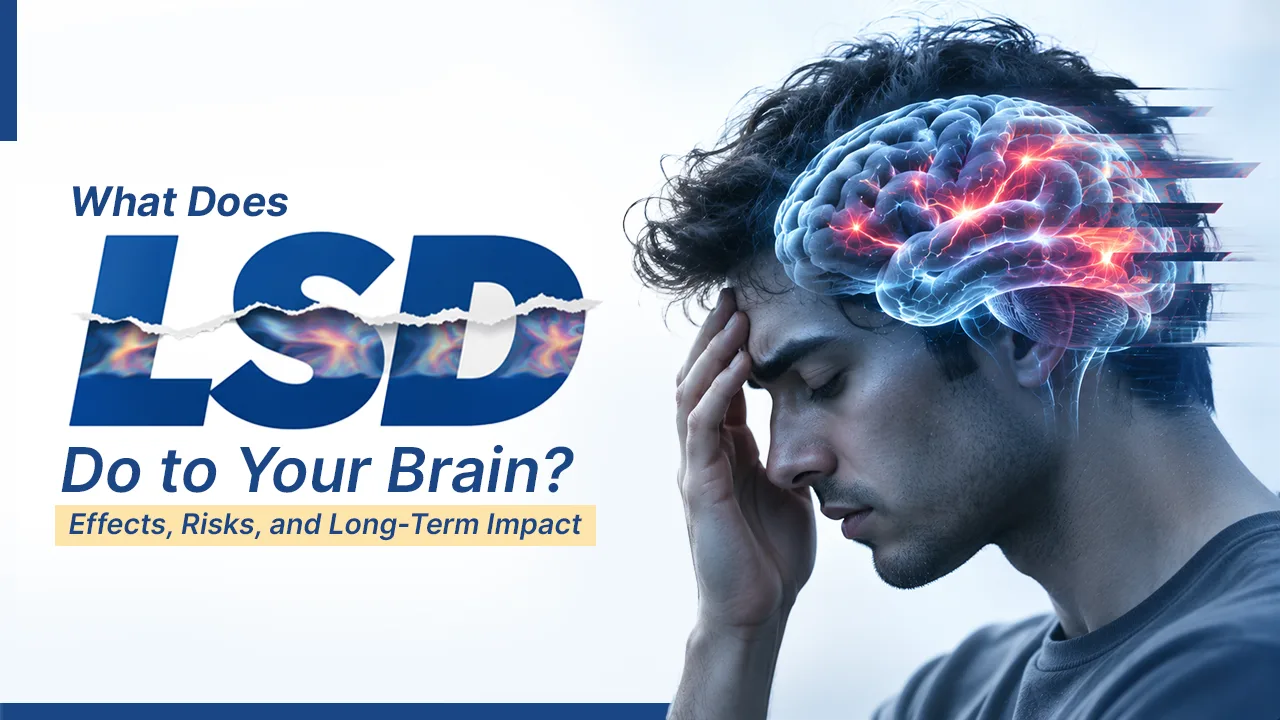
When someone you care about starts behaving differently after using LSD, it can be difficult to understand what is happening. They will seem unusually anxious, describe seeing things that are not there or struggle to distinguish what is real. This can be painful, and you may worry whether these changes will pass or if the drug has affected their brain in a lasting way.
Beyond sensory perception, LSD can affect how you think, process emotions, and perceive the world around you. If you or your loved one has used LSD, you may be concerned about its effects, particularly whether these changes can continue after the drug wears off. Understanding how LSD influences brain activity, the possible psychological risks and the symptoms that need attention can help you recognise when professional support may be necessary.
LSD (lysergic acid diethylamide) or acid is a mind-altering substance that affects how your brain processes sensory information, feelings and thoughts. It binds to serotonin receptors, thus affecting mood, perception, and other brain activities. It can cause hallucinations, strange time perception and unusual thoughts with intense emotional responses.
Most immediate symptoms are short-lived, lasting a few hours, but some people have psychological effects that last. This becomes hard to deal with if used repeatedly. An understanding of how LSD works in the brain helps you comprehend these risks without shame or judgment.
Key Insights
- Understand how LSD interacts with serotonin receptors and affects brain signalling.
- Learn about its emotional, physical and perceptual effects.
- Find out whether LSD causes damage to brain cells.
- Recognise potential long-term dangerous effects, such as persistent psychosis and HPPD.
- Know when professional assessment and intervention is necessary.
How Does LSD Affect Your Brain?
Quick Answer
Small experimental studies in healthy volunteers found that LSD changes communication between brain regions and alters patterns of brain activity, including in the default mode network.[1]These changes contribute to unusual sensations, altered thought patterns and changes in consciousness. Effects typically begin 30 to 90 minutes after taking LSD and can last up to 12 hours.
LSD interacts with serotonin receptors including serotonin 5-HT2A receptor, which regulates mood, perception and cognition. This changes brain activity and affects how a person processes sensory information, emotions and thoughts. Serotonin is a chemical messenger that helps nerve cells communicate. LSD acts as a partial agonist at multiple serotonin receptors, including 5-HT2A.[3]
What Does an LSD Experience Feel Like?
Quick Answer
During an LSD experience, you may see, hear and process things differently. Colours appear more vibrant, sounds alter and your sense of time will differ from reality. You may feel excited and euphoric or experience anxiety, confusion or panic.
LSD is used recreationally, experimentally or for perceived spiritual experiences. However, its effects are unpredictable, and even someone expecting a positive experience may have an unpleasant or distressing reaction.
Common effects include:
| Type of effect | Possible symptoms |
|---|---|
| Physical | Raised blood pressure, increased heart rate, dilated pupils and tremors |
| Visual and sensory | Distorted colours, visual patterns and altered sounds |
| Emotional | Anxiety, fear, panic and mood changes |
| Cognitive | Foggy thoughts, confusion and distorted reality perception |
A distressing experience is commonly called a bad trip. Severe confusion or agitation requires medical attention.
Why Do People Take LSD?
People take LSD for recreational, experimental or perceived spiritual experiences. Some seek changes in consciousness, while others use it out of curiosity or to experience altered perceptions and emotions.[2]
But the motive for taking LSD does not dictate the experience. LSD can trigger anxiety, panic or confusion even when you or your loved one thinks it will be a positive experience.
Understanding these risks can help you make informed decisions about substance use and recognise when someone needs support.
Does Acid Kill Brain Cells?
Quick Answer
Current medical references do not establish that LSD causes brain-cell death in humans. Its recognised risks relate mainly to psychological and perceptual changes rather than established direct destruction of brain cells.[3]
Changes in brain activity during LSD exposure should not automatically be interpreted as physical brain damage. Research has identified changes in communication between brain regions, but these findings do not establish that neurons are being destroyed.[1]
If you notice changes in your thinking, memory or perception after using LSD, it is worth discussing them with a medical professional. Persistent symptoms deserve attention, although they do not necessarily indicate irreversible brain damage.
What Are the Long-Term Effects of LSD on the Brain?
Quick Answer
Two recognised possible long-term complications are hallucinogen persisting perception disorder (HPPD) and persistent psychosis. These conditions can involve recurring visual disturbances, paranoia and disorganised thinking.[6]
| Condition | Meaning | Possible symptoms |
|---|---|---|
| Hallucinogen persisting perception disorder (HPPD) | Recurring perceptual disturbances after hallucinogen effects have ended [6] | Visual patterns, halos around objects and trails behind moving objects [6] |
| Persistent psychosis | Ongoing disruption in perception and thinking [6] | Paranoia, visual disturbances and disorganised thoughts [6] |
Research has also examined the default mode network (DMN), a group of interconnected brain regions involved in self-related thinking and awareness. Changes in communication within this network have been associated with ego dissolution, when you feel that your usual sense of self has weakened or disappeared.[1]
These complications do not affect everyone who uses LSD. However, persistent changes in perception, behaviour or thinking warrant a psychiatric assessment to identify the concerns and determine appropriate care.
Does LSD Cause Tolerance or Addiction?
LSD does not typically cause the physical dependence seen with some other substances, but tolerance builds rapidly and can extend to other hallucinogens such as psilocybin and mescaline.[5] A small number of people still develop problematic use, sometimes diagnosed as hallucinogen use disorder, even without physical withdrawal. For a fuller answer, see Is LSD Addictive?
How Can Families Support Someone After a Difficult LSD Experience?
If your loved one is distressed after taking LSD, your response can make a difference. A calm environment and appropriate medical supervision can help them feel safer while they receive the care they need.
Here are some ways you can support them:
| Do | Avoid |
|---|---|
| Speak calmly and use simple language | Arguing about what the person sees or feels |
| Keep the surroundings quiet and safe | Leaving a severely distressed person alone |
| Observe symptoms and note when they began | Blaming or shaming the person |
| Seek medical assistance when needed | Giving medication without medical advice |
If your loved one develops severe confusion, agitation or thoughts of self-harm, seek urgent medical attention: call 112 or go to the nearest emergency department. Try to approach the situation without judgement. Knowing that they can speak openly about their experience may make it easier for them to consider professional help.
When Should You Seek Professional Help?
It can be difficult to determine whether changes in behaviour or perception will resolve on their own. However, certain symptoms should not be ignored.
Consider a psychiatric assessment if you or someone you know experiences:
- Recurring visual disturbances or flashbacks.
- Persistent paranoia or confusion.
- Unusual changes in mood or behaviour.
- Anxiety or low mood following LSD use.
- Repeated use despite problems at home, work or school.
- Difficulty stopping LSD use even when you want to.
A psychiatrist can assess these symptoms and identify possible medical or mental health causes before recommending treatment. For individuals seeking professional psychiatric care in Hyderabad, Jagruti offers support through its psychiatric hospital in Hyderabad.
If you need immediate assistance in India, call 112. Tele-MANAS, the Government of India's mental health helpline, is available at 1-800-891-4416 or 14416.[4]
Psychiatric Care at Jagruti Rehabilitation Centre
If LSD use has become difficult for you or your loved one to control, or you are experiencing changes in mood, thoughts or perception, our professional guidance will help you understand what is happening and explore suitable treatment options.
At Jagruti Rehabilitation Centre, we support individuals and families dealing with substance use and mental health concerns. Depending on your assessment and treatment needs, our services include:
- Psychiatrist-led assessment and diagnosis
- Individual psychotherapy
- Family counselling
- Residential rehabilitation programmes
- Support for co-occurring mental health and substance use conditions
We follow an individual-focused approach. Treatment recommendations are based on each person's assessment, symptoms and support needs.
If you are worried about your own LSD use or your loved one's well-being, you do not have to navigate these concerns alone. Speaking with a mental health professional can help you understand the available options and take an informed step towards treatment.
If you or your loved one needs structured support for substance dependence, speak with our clinical team or arrange an assessment by calling +91-9822207761.