
Key Insights
- Charas is cannabis resin, not dried flowers.
- 1.2% of Indians aged 10–75 use ganja or charas, or about 1.3 crore people. [4]
- Cannabis use was reported among 5.0% of males and 0.6% of females aged 10–75. [4]
- 1 in 7 ganja/charas users were dependent, compared with 1 in 16 bhang users. [4]
- Malana Cream and Kerala Gold are regional names, not medical classifications.
- Regular use can lead to cannabis use disorder.
- Charas withdrawal symptoms can include irritability, anxiety and sleep problems.
“Charas” is a word many Indian families have heard, but fewer people know exactly what it refers to. It is often confused with hash, ganja or other cannabis products, which creates uncertainty when a loved one is using it.
If you are worried about what your loved one is using, it helps to understand what charas actually is and how it differs from other cannabis products. Charas is cannabis resin, while the names used for different varieties in India are generally linked to particular regions.
What Is Charas?
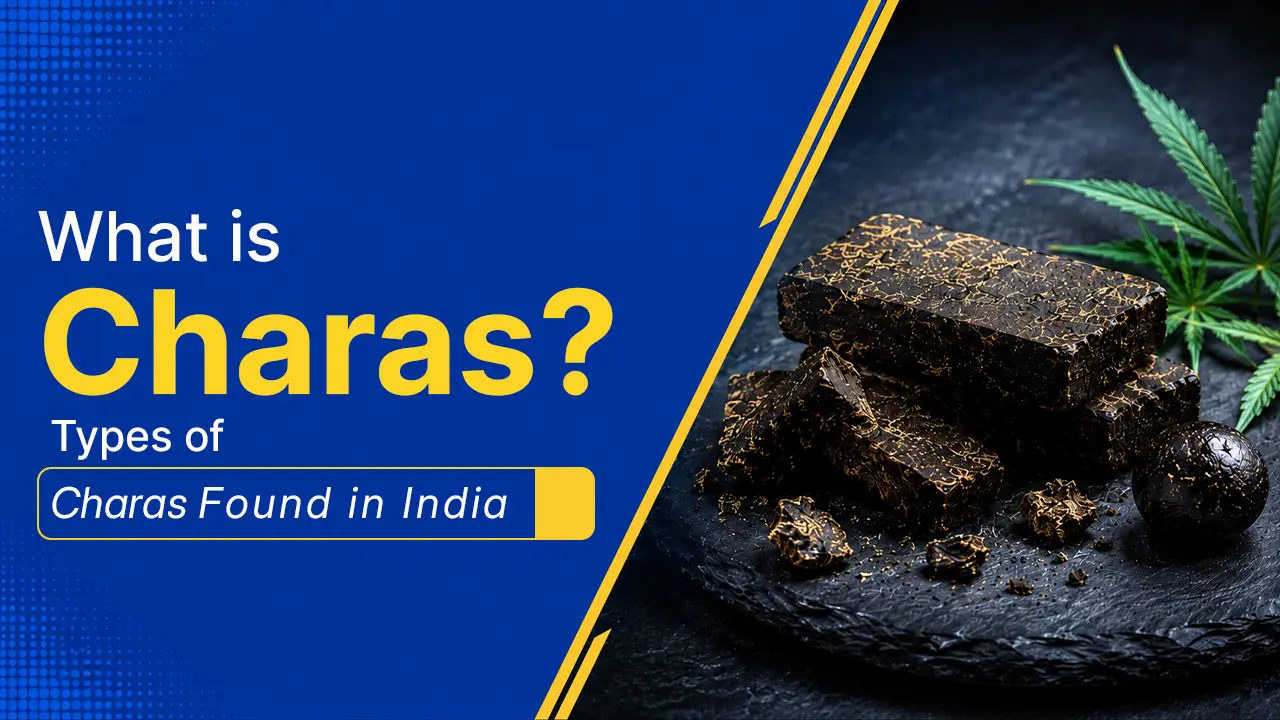
Charas is a cannabis resin preparation associated particularly with the Indian subcontinent. It is distinct from ganja, which refers to the flowering or fruiting tops of the cannabis plant under Indian law. [2]
Charas is generally a dark, sticky or pliable resin-like substance, although its appearance varies. It may be shaped into small balls or other compact forms. Appearance does not establish potency or safety.
The distinction matters because “charas” is sometimes used loosely to describe cannabis in general. In clinical practice, the useful questions are what substance the person is using, how often they use it and what has changed since they started.
What Are the Types of Charas Found in India?
There is no official medical classification of charas into different types. The names used in India generally refer to regional varieties, local products or places associated with particular forms of charas.
Commonly discussed names include Malana Cream, Rasol Cream, Tosh Ball, Waichin Cream, Nagaru Cream, Grahan Cream and Kerala Gold.
| Common name | Region commonly associated with it | Brief description |
|---|---|---|
| Malana Cream | Malana Valley, Himachal Pradesh | A well-known regional name associated with charas from the Malana area. |
| Rasol Cream | Rasol, Himachal Pradesh | A regional name associated with charas from the Rasol area. |
| Tosh Ball | Tosh, Himachal Pradesh | A regional name associated with charas from Tosh village. |
| Waichin Cream | Himachal Pradesh | A regional name associated with cannabis resin from the Waichin area. |
| Nagaru Cream | Himachal Pradesh | A regional name associated with charas from the Nagaru area. |
| Grahan Cream | Himachal Pradesh | A regional name used for a regional form of cannabis resin. |
| Kerala Gold | Kerala, particularly Idukki | A regional name, also called Idukki Gold, is associated with cannabis from the Idukki region. |
These names should not be treated like pharmaceutical categories. A regional name does not establish THC concentration, purity or clinical effect. Cannabis products vary in composition. [1]
Why Is Malana Cream So Well Known?
Malana Cream is a regional name associated with charas from the Malana area of Himachal Pradesh. It became widely known because of its association with the Malana region and its reputation as a distinctive form of traditional cannabis resin.
Its name is strongly linked to the region itself, which is why Malana Cream is one of the more recognisable regional names for charas in India.
What Effects Can Charas Have?
THC is the main intoxicating compound in cannabis and affects memory, attention, perception, coordination and judgement. [1]
The immediate experience differs between individuals. Some people become relaxed or euphoric; others experience anxiety, confusion or changes in perception.
Charas use is also associated with nervousness, aggression, altered sensory perception and changes in the perception of time.
Because charas typically has higher THC content than other cannabis preparations, it may also carry a greater risk of triggering temporary psychotic symptoms such as paranoia or hallucinations, particularly in people already vulnerable to psychosis. [1]
For you as a family member, the important question is what charas use can do to a person and when that use becomes a concern.
What Are the Signs of Charas Addiction?
Charas addiction is clinically understood as cannabis use disorder when cannabis use becomes difficult to control and continues despite negative consequences.
Look for a pattern such as:
- Craving or a strong urge to use
- Repeated unsuccessful attempts to stop
- Spending increasing time obtaining or using cannabis
- Continuing to use despite problems at home, work or college
- Withdrawal symptoms after stopping
- Giving up normal activities because of cannabis use [3]
One useful clinical question is: Can the person stop when they genuinely want to?
Repeated failed attempts to stop deserve professional attention.
Related Article: Difference Between Charas and Ganja
What Are Charas Withdrawal Symptoms?
Regular cannabis use produces withdrawal symptoms in some people when they stop. Charas withdrawal symptoms include irritability, anxiety, sleep disturbance, reduced appetite and cravings. [3]
These symptoms can make stopping difficult, particularly when cannabis has become part of a daily routine.
Withdrawal alone does not establish severe dependence. A clinician assesses the person's complete pattern of use, symptoms and effect on daily functioning.
How Is Charas Addiction Treated?
Charas addiction treatment begins with an assessment of cannabis use, dependence and psychological health.
Treatment focuses on:
- Assessment:
Establishing the pattern and severity of cannabis use and identifying co-existing mental health concerns.
- Withdrawal Support:
Managing symptoms when clinically necessary.
- CBT and Counselling:
Identifying triggers, changing unhelpful patterns and developing healthier coping strategies.
- Motivational Approaches:
Helping a person who is uncertain about stopping build readiness for change.
- Family Involvement:
Helping relatives understand the problem and provide appropriate support.
- Relapse Prevention:
Preparing for situations that could trigger renewed use.
Psychological and behavioural interventions remain central to cannabis use disorder treatment. There is no FDA-approved medication specifically for cannabis use disorder. [3]
When Should You Seek Help for a Loved One?
You do not need to wait for cannabis use to cause a major crisis.
Professional assessment is appropriate when a loved one is repeatedly unable to stop, hiding their use, experiencing withdrawal, neglecting responsibilities or continuing despite clear problems. [3]
If you are seeing these changes, the next step is to understand what is driving the use and what level of support the person actually needs. For families looking for professional support, a rehab center in Bangalore can provide structured assessment, counselling and recovery support based on the individual's needs.
How Jagruti Rehabilitation Centre Supports Recovery
At Jagruti Rehabilitation Centre, Dr. Amar Shinde, the centre's founder, brings more than 23 years of experience in addiction treatment and rehabilitation. The focus is on assessing the person as a whole and addressing the factors that are making cannabis use difficult to stop.
Support includes:
- Medical and psychiatric assessment to understand individual needs
- Individual counselling and therapy to address triggers and patterns of use
- Structured rehabilitation when supervised care is required
- Family involvement to help relatives support recovery appropriately
- Relapse prevention and aftercare to help maintain progress
If you are looking for professional support, call or WhatsApp Jagruti Rehabilitation Centre at +91 9822207761 to discuss an assessment and the next step for your loved one.
A Final Word for Families
Charas may have a long cultural history in parts of India, but familiarity should not make a developing substance problem easier to dismiss.
If someone you care about has started using it regularly, focus less on the label and more on what has changed: their control over use, relationships, responsibilities, mood and ability to function without cannabis.
Recovery is possible, and seeking professional assessment is a constructive first step.