

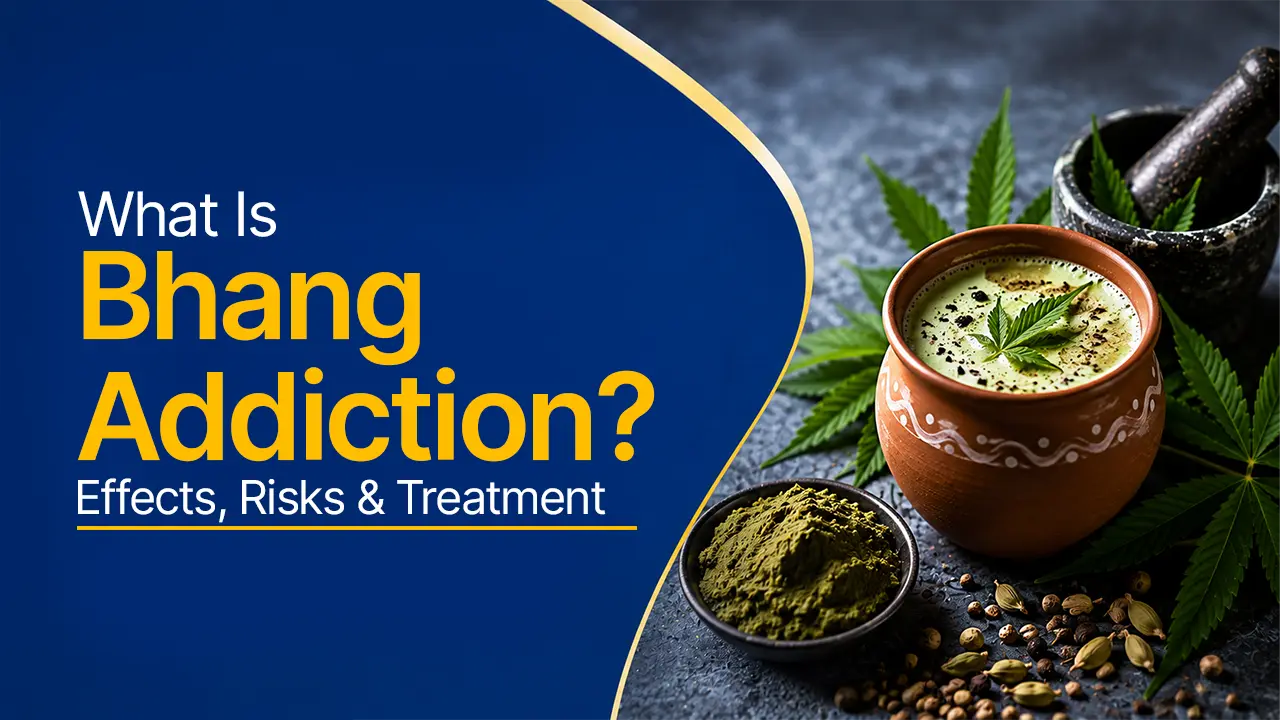
Bhang is one of the oldest and most familiar cannabis preparations in India, deeply woven into tradition. For many families, festivals like Holi and Maha Shivratri are associated with bhang lassi and bhang-laced sweets. This cultural acceptance can make bhang seem harmless, simply part of celebration rather than a substance of concern.
However, cultural familiarity does not remove health risks. Bhang is made from the cannabis plant and contains THC, which causes intoxication [1]. Regular use can lead to cannabis use disorder and, in some individuals, bhang addiction [2]. With professional care, recovery is possible, helping people move beyond dependence and rebuild healthier lives.
Is Bhang Addictive?
Bhang is an edible cannabis preparation made from the leaves and buds of the cannabis plant. It contains THC, which produces intoxication. Yes, bhang can be addictive. Regular or heavy use may lead to cannabis dependence and cannabis use disorder, particularly in adolescents and frequent users [2]. Bhang addiction is treatable through professional assessment, therapy, and structured rehabilitation.
Key Insights
- Bhang is an edible cannabis preparation, not smoked.
- THC causes intoxication, while CBD is non-intoxicating [1].
- Regular use can lead to cannabis dependence [4].
- Adolescents and young adults face greater long-term risks [2].
- Withdrawal can include irritability, insomnia and cravings [4].
- Bhang addiction treatment is available and effective [3].
What Is Bhang?
Bhang is a preparation made from the dried leaves and flowering buds of the cannabis plant (Cannabis sativa). Unlike ganja or charas, which are smoked, bhang is consumed in food and drinks. It is commonly prepared by grinding the leaves and flowers into a paste and blending it into traditional preparations such as bhang lassi, bhang thandai and sweets. Bhang goli is another traditional preparation made from ground bhang leaves and water.
What Makes Bhang Psychoactive?
Bhang's effects come from its cannabinoids, mainly THC and CBD. THC binds to receptors in the brain's endocannabinoid system, producing the "high" that alters mood, perception, and coordination [1]. CBD, by contrast, is non-intoxicating and does not cause a high. It is the concentration of THC that determines how strong the intoxication feels.
Why Do Bhang Effects Feel Different from Smoking Cannabis?
Because it is eaten or drunk rather than smoked, THC passes through the digestive system and liver before reaching the bloodstream. This means the effects take longer to appear but can last much longer than those from smoking cannabis [6]. The delayed onset can also make accidental overconsumption more likely.
The Effects of Bhang on the Brain and Body
It acts on both the mind and the body, and its effects extend well beyond the initial feeling of relaxation.
Brain Effects
THC interacts with the endocannabinoid system and influences dopamine release, which drives the sense of reward [2]. This can disrupt:
- Memory and the ability to retain new information.
- Attention and focus.
- Learning and processing.
- Decision-making and judgement.
Physical Effects
The physical impact of bhang includes:
- A raised heart rate.
- Increased appetite, often called "the munchies".
- Poor coordination and unsteady movement.
- Slowed reflexes and reaction time.
Bhang vs Ganja vs Charas
These three cannabis products are often confused, but they differ in strength, source, and legal standing. This comparison answers a very common query.
| Feature | Bhang | Ganja | Charas |
|---|---|---|---|
| Plant part used | Leaves and buds | Flowering tops | Resin from the plant |
| THC concentration | Lowest | Moderate to high | Highest |
| Potency | Mild to moderate | Strong | Very strong |
| Form of use | Eaten or drunk | Smoked | Smoked |
| Legal status (NDPS Act, 1985) | Leaves excluded, so partly permitted | Prohibited | Prohibited |
For a closer look at how these differ in effect and use, see our guide on the difference between bhang and ganja.
Note that bhang occupies a legal grey area because the NDPS Act, 1985 excludes the leaves of the cannabis plant, while ganja and charas remain illegal.
Why Can Bhang Use Become Addictive?
Bhang abuse does not always begin with an intention to misuse it. Festival or recreational use can gradually become more frequent, particularly when it is used for relaxation or to cope with stress, anxiety, or depression. Curiosity, peer influence, easy availability, and the misconception that bhang is harmless can also contribute to regular use.
Occasional use can become problematic when a person starts using it more often or in larger amounts than intended. Signs can include tolerance, cravings, difficulty controlling use, and continued use despite harm to health, work, or relationships [4].
Warning Signs and Side Effects of Bhang
Bhang addiction symptoms can affect behaviour, daily life and physical wellbeing [5]. Warning signs may include increased use, failed attempts to stop, neglecting responsibilities, social withdrawal, poor concentration and ongoing fatigue.
The bhang side effects can vary from short-term reactions to longer-term risks [6]. Short-term effects may include euphoria, relaxation, anxiety, confusion, poor judgement and altered perception. Regular or heavy use can be associated with cannabis use disorder, memory impairment, cognitive impairment, anxiety and depression. Cannabis-induced psychosis can also occur in vulnerable individuals [7].
Bhang Overdose and Withdrawal
A bhang overdose can be deeply distressing, particularly because the effects of edible cannabis can build gradually [6]. Symptoms may include severe anxiety, panic, vomiting, confusion, disorientation, and paranoia. If someone experiences extreme paranoia, chest pain, uncontrollable vomiting, a racing heart that does not settle, or signs of psychosis, call 112 immediately or take them to the nearest emergency department without waiting to see if symptoms pass.
Regular use can also lead to bhang withdrawal when a person stops. Symptoms may include irritability, anxiety, insomnia, reduced appetite, cravings, and headaches [4]. They usually begin within a day or two of stopping and often ease within one to two weeks, although this varies depending on the person's pattern of use [4].
Who Is Most at Risk?
Some people face a greater risk of cannabis addiction, particularly teenagers and young adults whose brains are still developing [2]. Risk can also be higher for people with a family history of substance use, existing mental illnesses, or those who use it frequently or daily.
Diagnosing Bhang Addiction
There is no single test for bhang addiction. A mental health professional typically looks at a person's pattern of use, symptoms, and their impact on daily life through a psychiatric evaluation, clinical interview, and assessment against DSM-5 criteria for Cannabis Use Disorder [4]. This helps distinguish casual use from cannabis dependence and guides the appropriate treatment.
Treatment for Bhang Addiction
Bhang addiction treatment works best when it is structured, personalised and evidence-based [5]. The approach depends on the person's pattern of use, physical and mental health, and recovery needs.
Assessment & Detox
Treatment begins with a comprehensive assessment of physical health, mental health and substance use. During withdrawal, medical support is usually supportive rather than intensive, helping manage discomfort, sleep problems, and cravings during the early stages.
Therapy
Therapy is an important part of recovery. CBT helps people recognise thoughts and triggers linked to their use and develop healthier responses, while MET helps strengthen motivation to change [3]. Individual therapy provides space to work through personal challenges, while group therapy can reduce isolation. Family therapy helps loved ones better understand addiction and provide meaningful support at home.
Long-Term Recovery
Recovery does not end when initial treatment does. Dual diagnosis treatment can address addiction alongside anxiety, depression or other mental health conditions. Relapse prevention helps people recognise high-risk situations and manage cravings, while ongoing aftercare provides continued support as they adjust to life after treatment.
Can Bhang Addiction Be Prevented?
Prevention starts with understanding the risks of regular use. Education, open family awareness, accessible mental health support and early intervention can all help reduce the risk of dependence. Challenging the idea that bhang is harmless simply because it is traditional or partly permitted can also encourage people to seek help sooner.
When Should You Seek Professional Help?
Professional support may be appropriate when someone repeatedly uses bhang despite wanting to stop, has failed attempts to quit, experiences withdrawal, or develops worsening anxiety, depression or psychosis. Problems with relationships, work or studies can also be signs that use has become difficult to control.
How Jagruti Rehabilitation Centre Helps Treat Bhang Addiction
At Jagruti, care for bhang addiction is structured around individual needs and led by qualified professionals. Support includes psychiatrist-led care, clinical psychology, individual counselling, CBT, MET, family counselling, holistic rehabilitation, relapse prevention and long-term aftercare. If you're looking for support in Mumbai, our rehabilitation centre in Mumbai offers this same structured, professional-led care.
The focus is on understanding the individual, addressing the factors behind addiction and providing support throughout recovery.
Hope Is Always Around
Bhang addiction can feel isolating, but no one should feel ashamed for seeking help. With professional guidance, the right treatment and steady support, recovery is possible. Reaching out is not a weakness; it is the first step towards recovery.