Key Insights
- Learn which Indian states report high opioid use relative to their populations, including Mizoram, Nagaland, Arunachal Pradesh, Sikkim and Manipur.[1]
- Discover which states, including Chhattisgarh, Tripura and Punjab, report high alcohol use.[1]
- Understand how the prevalence of alcohol, cannabis and opioid use varies across India.[1]
- Find out why people start using drugs, how to recognise the warning signs of addiction and which treatment options help.
Which Indian States Have the Most Drug Users?
Quick Answer
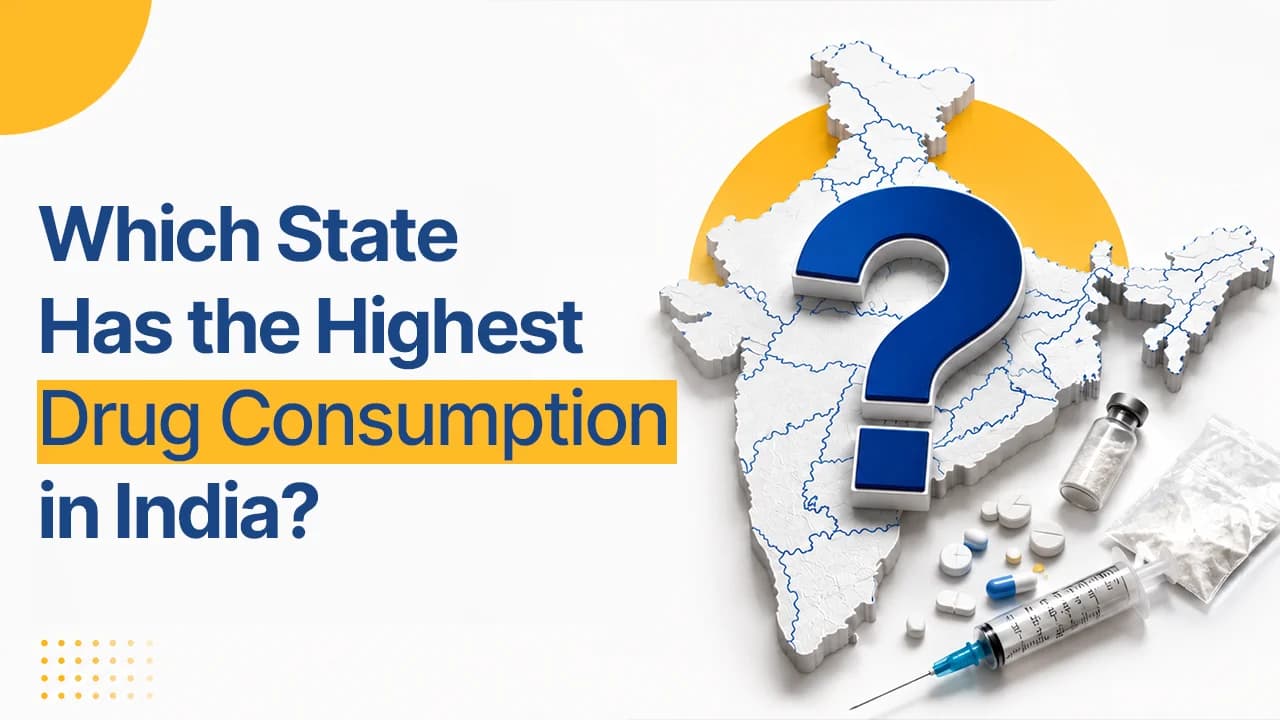
Chhattisgarh (35.6%), Tripura (34.7%) and Punjab (28.5%) reported high alcohol use, while Punjab (12.55%), Sikkim (10.94%) and Delhi (8.12%) reported high cannabis use.[1] Mizoram (25.67%), Nagaland (25.22%), Arunachal Pradesh (22.18%), Sikkim (18.74%), Manipur (14.22%), Punjab, Haryana and Delhi reported high opioid use. Sikkim (15.61%), Nagaland (9.57%), Manipur (7.73%) and Mizoram (6.80%) reported high non-medical sedative use.[1]
There is no single state with the highest consumption across every substance. The answer depends on which substance is being measured and whether consumption is assessed by the proportion of people using it or the total number of users. This distinction is important when comparing drug consumption in India by state.
What Do Drug Addiction Statistics in India Reveal?
The national survey conducted by the National Drug Dependence Treatment Centre (NDDTC), All India Institute of Medical Sciences (AIIMS), New Delhi, covered people aged 10–75 during 2017–2018 and was published in 2019. It reported differences in substance use across Indian states.[1]
| Substance | State-wise drug consumption in India | National prevalence and estimated users |
|---|---|---|
| Opioids | Mizoram, Nagaland, Arunachal Pradesh, Sikkim, Manipur, Punjab, Haryana and Delhi | 2.06%, or approximately 2.26 crore users. Uttar Pradesh, Punjab, Haryana, Delhi and Maharashtra also account for substantial numbers of people with opioid use disorders.[1] |
| Alcohol | Chhattisgarh (35.6%), Tripura (34.7%), Punjab (28.5%), Arunachal Pradesh (28%) and Goa (28%) | 14.6%, or approximately 16 crore users.[1] |
| Cannabis | Punjab (12.55%), Sikkim (10.94%), Delhi (8.12%), Uttar Pradesh (7.36%) and Chhattisgarh (4.98%) | 2.8%, or approximately 3.1 crore people who used cannabis within 12 months.[1] |
| Sedatives | Sikkim, Nagaland, Manipur and Mizoram | Approximately 1.08%, or 1.18 crore people with non-medical, non-prescription use.[1] |
A separate study published in 2019, based on the National Mental Health Survey, found that alcohol and other substance use disorders were more common in Punjab than in the other states included in the study.[2]
These findings highlight differences in drug prevalence in India. However, state-level figures do not establish which city has the highest number of people living with addiction. Police seizures and arrests also measure detected drug-related activity rather than the prevalence of substance use among a city's residents.
Why Do People Start Using Drugs?
Family, social and individual factors contribute to substance use. Research on adolescent substance use identifies family influences, peer groups and certain mental health conditions as contributing factors.[4]
Some people try drugs because their friends use them, while others turn to substances when facing emotional problems. Early drug use does not necessarily lead to addiction later in life, although starting at a young age is associated with a greater risk of developing addiction.[3]
Parents can help by communicating regularly with their children and discussing the risks associated with substance use. Rather than resorting to punishment or accusations, they can address behavioural changes through calm, supportive conversations.
When Does Drug Use Become a Cause for Concern?
Quick Answer
Drug addiction involves compulsive substance use despite harmful consequences. Warning signs include strong cravings, difficulty controlling use and continuing to use substances despite health, financial, work or relationship problems. Recognising these changes helps families encourage someone to seek professional assessment and understand the available treatment options.
If you are concerned about someone, speak with them privately and describe the changes you have noticed without blaming them. Offering to accompany them to a healthcare professional helps them access an assessment.
How Is Drug Addiction Treated?
Quick Answer
Treatment depends on the substance, the severity of use and the person's physical and mental health. A healthcare professional assesses individual needs and recommends an appropriate treatment plan, which includes supervised detoxification, counselling, medication for certain substance use disorders and continued support.
Treatment includes:
- Clinical assessment: A professional evaluates substance use, existing health conditions and potential withdrawal risks.
- Medical detoxification: Supervised withdrawal management may be necessary, as stopping alcohol or certain sedatives can cause dangerous withdrawal symptoms. If someone has seizures, severe confusion or signs of an overdose, call 112. For help with drug or alcohol use, call the National Drug Dependence helpline 14446. For emotional support, contact Tele-MANAS on 14416 or 1-800-891-4416.
- Therapy and medication: Counselling and behavioural therapies help people manage triggers. Medications are also available for certain substance use disorders.
- Follow-up care: Regular appointments and relapse-prevention planning supports ongoing recovery.
Detoxification alone does not address every aspect of addiction. If substance use resumes, the treatment plans need to be reassessed. A setback does not mean recovery is impossible.
Where Can You Seek Help for Drug Addiction?
Addiction Treatment at Jagruti Rehabilitation Centre
Jagruti Rehabilitation Centre supports individuals and families seeking help for substance use problems. A professional assessment helps determine a person's needs and whether a structured rehabilitation programme is suitable.
People looking for professional addiction treatment in Mumbai can explore a rehab centre in Mumbai to learn about available rehabilitation services and find out whether a structured treatment programme meets their needs.
If you are concerned about a loved one's substance use, speaking with a healthcare professional helps you understand the available treatment options and decide on the next steps.
Understanding Drug Consumption in India and Finding Treatment
Drug consumption in India varies by substance and state, with no single state ranking highest across all categories. Understanding these differences helps you interpret state-wise drug consumption patterns more accurately.
Drug abuse in India and substance abuse in India are important public health concerns, but population statistics alone cannot determine an individual’s risk or treatment needs. Recognising the warning signs of addiction and seeking professional guidance helps individuals and families make informed decisions about care.
To speak with the clinical team at Jagruti Rehabilitation Centre, call +91-9822207761. Professional guidance helps you or your loved one explore suitable treatment options and take the next step towards recovery.