
Bipolar disorder has affected some of the most celebrated musicians, actors, writers, and public figures in modern history, and several have chosen to talk about their experiences openly. Who are some famous people with bipolar disorder? From Indian rap and Hollywood to literary history, the answer includes people from very different backgrounds and generations. Their experiences show that bipolar disorder does not define a person’s capacity for achievement or creativity.
In India, where conversations around mental health still carry deep stigma, knowing that successful people with bipolar disorder have built extraordinary careers while managing this condition can shift how families think about the diagnosis. Bipolar disorder affects approximately 40 million people worldwide [1]. The National Mental Health Survey (NMHS 2016) estimated a lifetime prevalence of 0.5% across India’s adult population [3].
Key Insights
- Learn what bipolar disorder involves: a condition causing extreme shifts between mania and depression, affecting roughly 40 million people globally [1].
- Understand the India picture: the NMHS 2016 found a lifetime bipolar disorder prevalence of 0.5% in India, with men having approximately 1.5 times higher odds of a lifetime diagnosis than women [3].
- Recognise who has come forward: several celebrities with bipolar disorder, including Indian musicians and actors, have shared their diagnoses publicly, helping challenge stigma.
- Know that treatment can help: bipolar disorder responds to medication, therapy, and long-term psychiatric support, and many famous people living with bipolar disorder lead full, productive lives [2].
What Is Bipolar Disorder and How Does It Affect You?
QUICK ANSWER
Bipolar disorder, previously called manic depression, is a chronic mental health condition causing extreme mood shifts between mania (or hypomania) and depression. These episodes affect your energy, sleep, behaviour, judgement, and ability to carry out daily activities [2].
The two main types are:
- Bipolar I: manic episodes lasting at least 7 days (or severe enough to need hospitalisation), often followed by depressive episodes lasting 2 weeks or more.
- Bipolar II: a pattern of depressive episodes and hypomanic episodes (a less intense form of mania), without the full manic episodes seen in Bipolar I. [2]
The NMHS found a treatment gap of 70.4% for current bipolar affective disorder in India [3]. The condition responds to treatment. Mood stabilisers, psychotherapy, and long-term psychiatric monitoring allow many individuals to manage their symptoms effectively [2].
Which Famous People Have Publicly Spoken About Living With Bipolar Disorder?
QUICK ANSWER
Yo Yo Honey Singh, Mariah Carey, Carrie Fisher, Catherine Zeta-Jones, and Selena Gomez are among the well-known celebrities diagnosed with bipolar disorder who have spoken publicly about their experiences, helping millions see the condition as something to be managed rather than hidden.
Which celebrities have bipolar disorder? The following table highlights some well-known people diagnosed with bipolar disorder who have shared aspects of their mental health journeys publicly.
| Name | Known For | How They Shared |
|---|---|---|
| Yo Yo Honey Singh | Indian rapper and music producer | Revealed his bipolar disorder diagnosis publicly. Withdrew from public life for nearly two years during treatment. Documented his journey in the Netflix documentary Famous (2024), describing psychotic symptoms, isolation, and the long road to stability |
| Shama Sikander | Indian TV actress | Spoke publicly about experiencing severe depression linked to bipolar disorder and how psychiatric care helped her recover. Has since become a mental health advocate in India |
| Mariah Carey | Singer and songwriter | Shared her Bipolar II diagnosis in 2018 after managing it privately for nearly two decades |
| Stephen Fry | British actor and writer | Documented his experience with cyclothymia, a milder condition on the bipolar spectrum, in his BBC documentary The Secret Life of the Manic Depressive. He has also used the terms bipolar disorder and manic depression for his condition. |
| Carrie Fisher | Actor (Star Wars) | Publicly shared her Bipolar II diagnosis and voluntarily sought treatment |
| Catherine Zeta-Jones | Actor | Publicly disclosed her bipolar II diagnosis in 2011 through her publicist after receiving treatment for depression |
| Selena Gomez | Singer and actor | Disclosed her bipolar disorder diagnosis in 2020 |
For Indian audiences, Honey Singh’s account was particularly significant. As a prominent Indian musician, his acknowledgment in Famous that he spent years unable to function, changed doctors before finding treatment that worked, and felt paranoid during a tour in the United States challenged the widespread assumption that bipolar disorder is something to hide.
Shama Sikander’s openness reached a different audience, particularly women in India, that clinical awareness campaigns alone rarely do. She described how the condition brought her to a point of severe crisis and how intervention helped her rebuild.
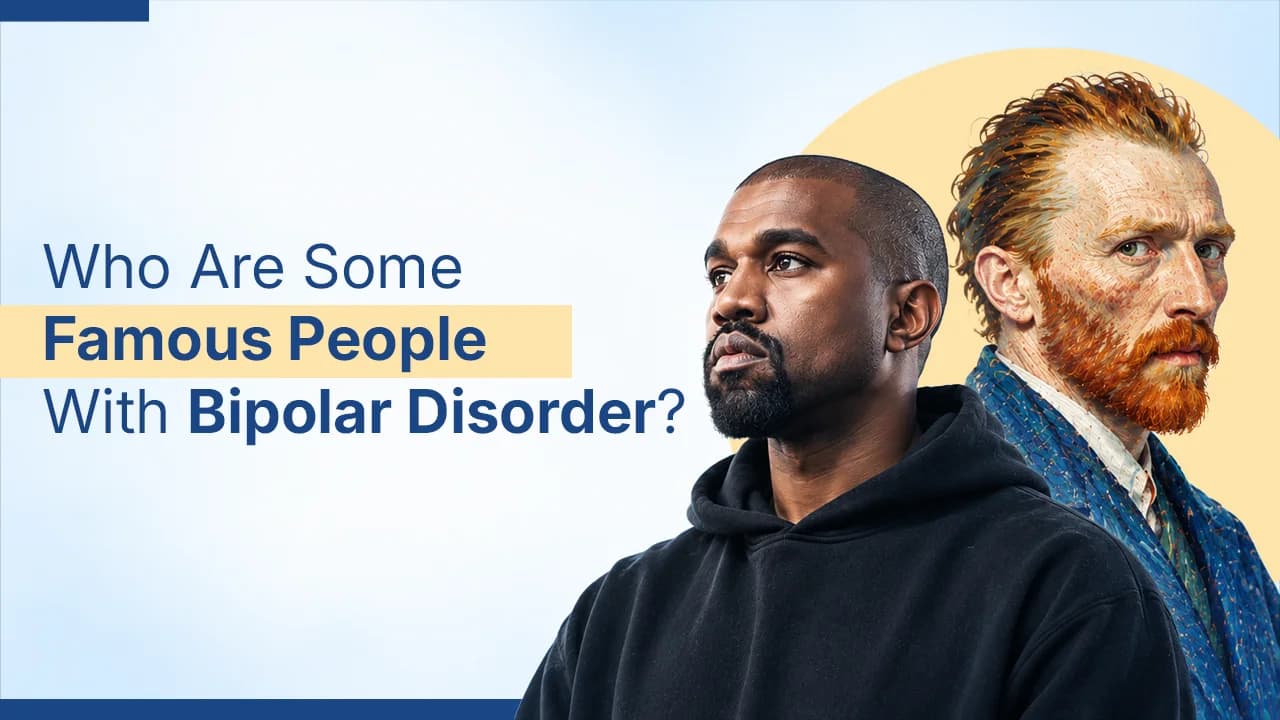
Among famous men with bipolar disorder, Honey Singh and Stephen Fry have spoken publicly about their experiences. Kanye West has also discussed bipolar disorder, although his public statements about his diagnosis have changed over time. In February 2025, he said he had been misdiagnosed and attributed his experiences to autism. A person’s diagnosis should not be inferred from media reports alone.
The broader mental health conversation in India has also grown, with Deepika Padukone (depression) and Anushka Sharma (anxiety) speaking publicly about their conditions. While their diagnoses differ from bipolar disorder, their openness has helped create an environment where accounts like Honey Singh’s are received with empathy rather than judgement.
Have Historical Figures Been Linked to Bipolar Disorder?
QUICK ANSWER
Vincent van Gogh, Virginia Woolf, and Winston Churchill are among the historical figures most often linked to bipolar disorder in medical literature. However, these are retrospective analyses based on biographical accounts rather than confirmed clinical diagnoses.
Among the most frequently discussed:
- Vincent van Gogh: medical researchers have published extensively on his documented episodes of extreme elation followed by severe depression, self-harm, and hospitalisation [4]
- Virginia Woolf: her diaries and letters describe mood patterns consistent with bipolar disorder, and her condition has been analysed in psychiatric literature
- Winston Churchill: referred to his depressive episodes as his “black dog,” and researchers have explored whether his documented mood swings reflect a bipolar pattern
These individuals lived before modern psychiatric criteria, so links to bipolar disorder are based on biographical interpretation rather than clinical assessment. Their stories show that extreme mood patterns have long existed among people who produced extraordinary work.
How Does Public Conversation About Bipolar Disorder Help Reduce Stigma?
QUICK ANSWER
When successful people who are bipolar talk openly about their diagnosis, it directly challenges the shame and silence that prevent millions from seeking help, particularly in countries like India where about 70% of people with current bipolar disorder were not receiving treatment from a trained provider [3]
When Honey Singh’s Netflix documentary Famous reached millions of Indian viewers in 2024, it took the conversation about bipolar disorder to an audience that clinical journals and awareness campaigns rarely reach, particularly young men, a group statistically less likely to seek mental health support.
Bipolar disorder responds well to treatment when identified early and managed consistently [2]. The barrier is rarely the absence of treatment. It is the delay in seeking it. Every public conversation that normalises mental health care removes one more obstacle between someone who is struggling and the help they need.
Psychiatric Care at Jagruti Rehabilitation Centre
If you or someone close to you is living with bipolar disorder and needs professional psychiatric support, Jagruti Rehabilitation Centre’s mental hospital in Mumbai offers residential treatment programmes combining psychiatric evaluation, medication management, individual and group therapy, and long-term aftercare planning.
- Comprehensive psychiatric assessment including mood charting, diagnostic evaluation, and screening for co-occurring conditions
- 24-hour medical supervision during the stabilisation phase
- Evidence-based psychotherapy including CBT, psychoeducation, and relapse prevention strategies delivered by clinical psychologists
- Family counselling from early in the treatment process
- Daily routines designed around sleep regulation, nutritional support, physical activity, and emotional stabilisation
If you or someone you know is in crisis or having thoughts of self-harm, call 112 or contact Tele-MANAS on 14416 or 1-800-891-4416.
To speak with the clinical team or arrange an assessment, call +91-9822207761.
Recovery from bipolar disorder is ongoing. With the right clinical team and sustained management, many people with bipolar disorder live full, productive lives. Reaching out is the first step.