
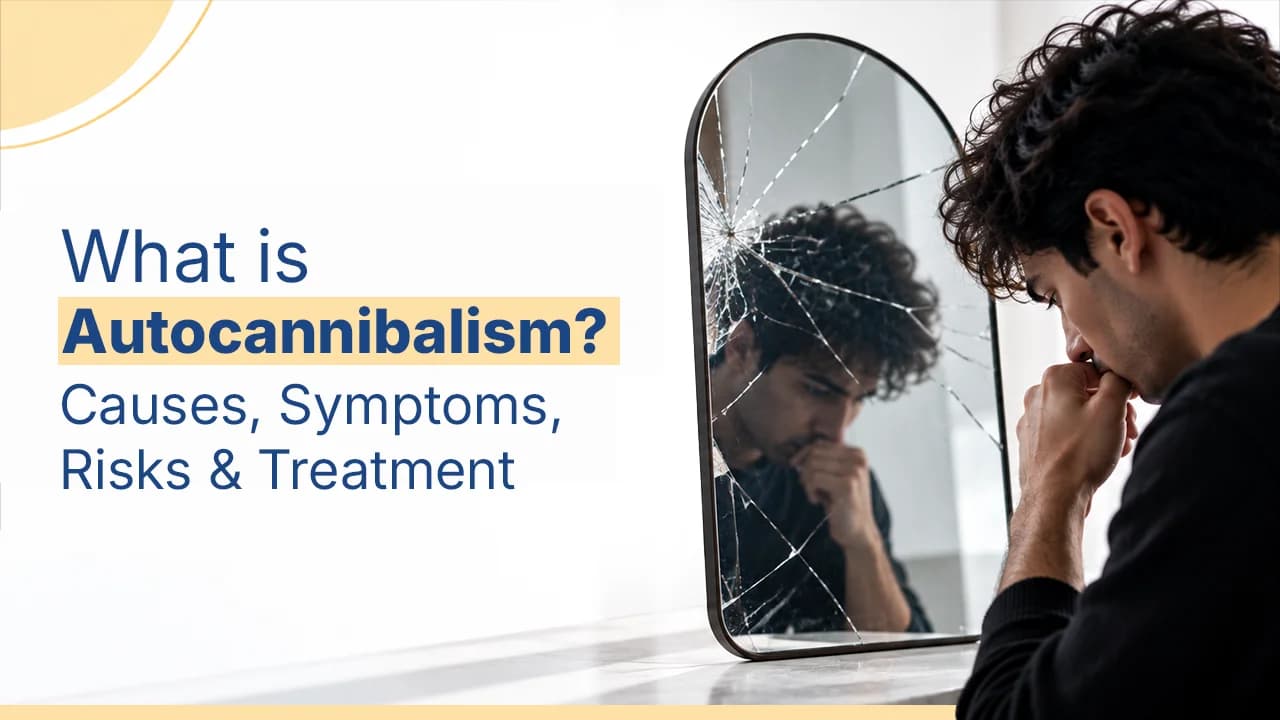
You must have often wondered whether biting your own nails is a form of self-cannibalism or not. Nail biting is a common body-focused repetitive behaviour that is sometimes loosely grouped with autocannibalism, but in the medical literature the term usually describes much rarer behaviour: biting and eating one’s own tissue.
'Autocannibalism' is a term that most people haven’t come across that often in their lives, which alone can make this term feel confusing or even alarming. But it means quite literally what it appears to mean: self-cannibalism, i.e., eating your own self (your own parts of the body).
It is hard to place it into one single box since it shows up alongside other psychological or behavioural patterns in many cases. This article explains exactly what autocannibalism means, why it happens, what to watch for, and also what help is available today.
What Does Autocannibalism Mean?
Autocannibalism, also known as self-cannibalism or autophagia, refers to behaviours involving intentionally biting, injuring, or consuming one’s own body. These behaviours can range from relatively common habits, such as nail biting, which are more often classed as body-focused repetitive behaviours, to rarer and more harmful forms that cause significant physical injury.
Such behaviours may be associated with underlying factors such as stress, anxiety, or other mental health conditions.
When they become frequent, difficult to control, or cause physical harm, they should not be overlooked, and seeking professional support can help address the underlying cause and prevent further injury.
What Behaviours Are Linked to Autocannibalism?
Autocannibalism can appear in different forms based on what a person feels compelled to consume.
In some cases, it may involve repeatedly biting or eating parts of the body, such as the lips or cheeks. In other cases, it may involve consuming blood, scabs, or skin. The behaviour can vary in frequency and severity, and the reasons behind it may also differ from one person to another.
Understanding these different forms can help put the behaviour into context. It is also important to consider what may trigger it and whether it causes physical harm or affects daily life.
Here are behaviours often discussed alongside autocannibalism:
| Behaviour | What it involves | Potential risks |
|---|---|---|
| Onychophagia | Compulsively biting or eating fingernails, often causing significant nail damage. | Bleeding, infections, damaged nails |
| Dermatophagia | Repeatedly biting or eating the skin, particularly around the fingers or hands. | Open wounds, scarring, infections |
| Trichophagia | It is a subset of pica, an eating disorder, and includes compulsively eating your own hair but can be a form of autocannibalism as well. | Accumulation of hair in the intestines (trichobezoar) leading to abdominal pain [3], intestinal blockage, and digestive complications. |
| Severe autocannibalism | Eating larger portions or entire parts of your own body. | Severe injury, infections, permanent damage, potentially life-threatening complications |
What Causes Autocannibalism?
There isn't just one root cause to it, as different people end up with autocannibalism due to several different reasons, like-
- Psychological Causes
Autocannibalism is not a standalone diagnosis in DSM-5-TR. It has been reported alongside psychological distress, neurological impairment, or psychiatric illness. The behaviour involves a person feeling compelled to bite, chew, or consume parts of their own body.
For many, autocannibalism is tied to emotional strain like-
- Ongoing emotional distress
- Anxiety or chronic stress
- Trouble regulating strong emotions
- Compulsive tendencies
- Unresolved trauma
- Symptoms of an underlying condition like Self-Injurious Behaviour (SIB) [2] or body-focused repetitive behaviours (BFRBs)
In these cases, autocannibalism often acts as a coping outlet, even if it's not a helpful one. It can give a temporary sense of relief or control during moments that feel overwhelming. It has also been reported in people with severe OCD, intellectual and developmental disability, or psychosis such as schizophrenia. [4]
- Behavioural and Other Factors
Sometimes the behaviour is less about emotions and more about habit or impulses, which include-
- Repetitive or compulsive actions
- Habitual biting or picking that's hard to notice in the moment
- A possible link to other psychological or neurological conditions like TBI (Traumatic Brain Injury) [1], frontal lobe dysfunction, or developmental disability.
What Are the Symptoms and Signs of Autocannibalism?
Two people can show autocannibalism for completely different reasons. One might be driven by anxiety, while the other by a compulsive habit that started years ago. Understanding the trigger is usually the first real step toward addressing it.
Here are the signs to watch for.
1. Physical symptoms like
- Repeated small injuries
- Soreness or irritation in the affected area
- Bleeding
- Damaged or broken skin
- Scarring
- Signs of infection, like swelling or discharge
2. Behaviour Symptoms like
- Strong urges to bite, pick, or eat skin, nails, or hair that feel hard to resist
- Wanting to stop but struggling to
- The behaviour getting worse during stressful periods
- Trying to hide the behaviour from others
- Feeling shame, distress, or a sense of losing control
3. Gastrointestinal symptoms like
- Feeling nauseated
- Pain in the abdominal region or stomach
- Having stomach ulcers
- Blood in the stool
- Having intestinal blockages in the gastrointestinal tract due to trichobezoar.
If several of these signs are showing up together, especially the physical ones, then you need to pay more attention to it and ask for the required help from professionals.
What Are the Risks and Complications of Autocannibalism?
The risks depend on how often the behaviour is happening and how severe it has become. It could include-
1. Physical Risks
Repeated tissue damage during autocannibalism can often lead to open wounds, causing infection, inflammation, and pain.
It raises the chance of scarring over time while also causing nerve damage in some cases. [1]
2. Psychological and Social Risks
Beyond the physical side, there are often underlying emotional factors for this behaviour.
Many people feel embarrassed or ashamed of the behaviour. This can lead to withdrawing from friends, family, or social situations.
Over time, this can start to affect relationships and daily life more broadly.
3. Possible Complications
When autocannibalism continues without support, small issues can build into bigger ones, like untreated wounds becoming more prone to infection, while the unaddressed underlying cause will tend to keep the cycle going for a long time without resolving it.
How Is Autocannibalism Diagnosed?
A healthcare professional will usually ask questions to understand the whole picture, such as:
- What is the frequency of the behaviour?
- What appears to initiate it?
- Whether the urges for autocannibalism are hard to control or not?
- What is the mental health of the person before and after performing the autocannibalism
- If any physical injuries have occurred in the process and their severity
- Presence of other symptoms along with it related to mental health or behaviour.
Depending on the situation, a doctor, psychologist, psychiatrist, or any other professional may do the assessment and provide guidance, which may include CBT, habit reversal training (HRT), or medications.
Autocannibalism Treatment: What Help Is Available?
Treatment tends to focus less on stopping the behaviour in isolation and more on understanding the underlying problems for proper and accurate treatment. Milder forms, such as nail or skin biting, can often be managed through outpatient therapy, while severe cases linked to psychosis or serious physical injury may need inpatient care at a mental hospital in Chennai, where psychiatric and medical treatment can happen under one roof. Treatment typically includes:
| Treatment Area | Focus | What It May Involve |
|---|---|---|
| Therapy and Behavioural Support | Recognising triggers and building healthier coping strategies | Cognitive behavioural therapy (CBT); learning to notice urges before acting on them; finding alternative ways to manage stress and compulsive impulses |
| Treatment for Underlying Conditions | Addressing the root cause driving the behaviour | Care for anxiety, trauma, compulsive behaviour, or self-injury; medication if clinically appropriate, decided together with a healthcare provider |
| Treatment for Physical Injuries | Medical care for the body, separate from psychological work | Treating infections or more serious injuries; not skipping medical attention even when the underlying cause is also being addressed |
When Should You Seek Professional Help?
Seek a professional assessment if you notice any of these signs, and urgent medical attention where marked:
- The strong urges to bite, pick, or eat skin, nails, or hair become hard to ignore or control
- It's causing physical injuries
- There are signs of infection in the inflicted wound (urgent)
- Seeing blood in your stools or severe abdominal pain (urgent)
- Having thoughts of self-harm (urgent)
If someone is in immediate danger, has severe bleeding, or has a serious injury, call 112. For a mental health emergency or thoughts of self-harm, contact Tele-MANAS on 14416 or 1-800-891-4416.
In Conclusion
There's no one-size-fits-all treatment for autocannibalism, which is exactly why professional support matters in this case, so that they can diagnose the condition thoroughly and provide relevant treatment and medications to the individual based on their condition.
Showing patience, understanding, and calmness around someone who is struggling with autocannibalism can help them feel more comfortable. The way you respond matters to them as much as encouraging them to seek professional help.