
Therapy
repetitive transcranial magnetic stimulation rtms
Repetitive Transcranial Magnetic Stimulation (rTMS)
Introduction
Repetitive Transcranial Magnetic Stimulation (rTMS) is a non-invasive treatment that uses magnetic pulses to stimulate underactive areas of the brain linked to mood. rTMS therapy is primarily for depression that has not improved with antidepressant medicines, or where side effects make medicines difficult to continue. It also helps with conditions such as anxiety, OCD, PTSD and certain symptoms of schizophrenia. At Jagruti Rehabilitation Centres, rTMS treatment is offered only after a psychiatrist has assessed your history, symptoms and suitability. It requires no anaesthesia or surgery. rTMS is delivered in both outpatient and inpatient settings: outpatients can go home the same day, and inpatients continue treatment within the centre. If medicines have not been enough, an assessment can tell you whether rTMS therapy is a reasonable next step. Book an assessment to speak with a Jagruti psychiatrist.
What is rTMS therapy?
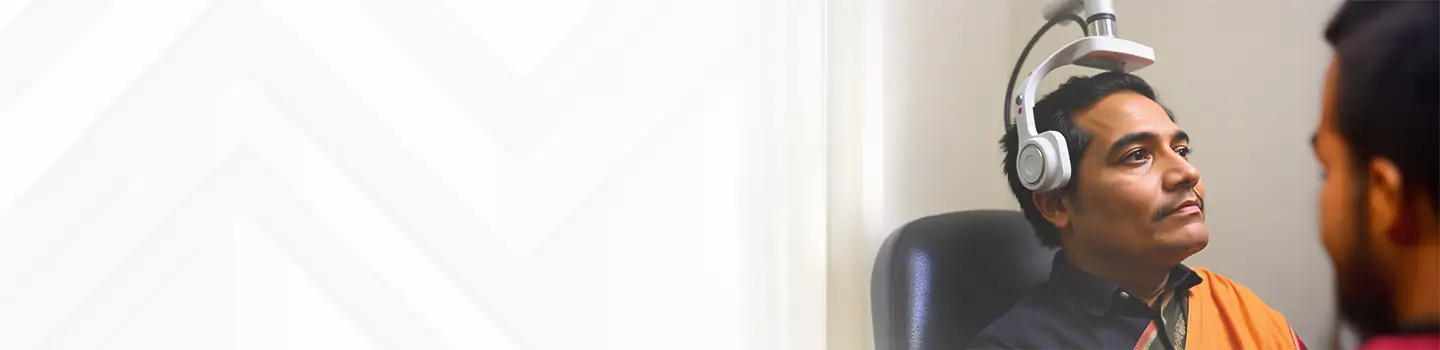
rTMS therapy is a non-invasive brain stimulation treatment. A magnetic coil is placed on the scalp and delivers repeated pulses to brain areas involved in mood regulation. You stay awake throughout and no anaesthesia is used [1]. The treatment is delivered in both outpatient and inpatient settings, with outpatients able to go home the same day.
The word "repetitive" describes the pattern of pulses. A single magnetic pulse, sometimes referred to simply as TMS, is used mainly to measure nerve function. rTMS delivers pulses in repeated trains over several minutes, which is what produces a treatment effect. TMS therapy using a deep TMS coil is designed to reach deeper brain structures. Standard rTMS uses a figure-of-eight coil to target surface-level regions with greater precision. Jagruti uses the standard figure-of-eight coil. Both methods are non-invasive and neither requires sedation.
Nothing is inserted and no recovery period is required. You sit in a treatment chair, the coil rests against your scalp, and you can resume your day immediately afterwards.
How does rTMS work?
An rTMS treatment coil held against the scalp produces short magnetic pulses. These pass through the skull and create small electrical currents in a targeted brain area, usually the front-left region linked to mood. Repeating this daily over several weeks is thought to help restore more typical activity in that circuit.
The coil is positioned over a specific spot chosen during assessment, so only that region is stimulated rather than the whole brain. Nothing enters the body and no medicine is involved. A single session is unlikely to produce a noticeable change; the effect is cumulative and depends on completing the planned course [2].
This is also where rTMS therapy differs from antidepressants. Medication acts chemically throughout the body, which is why it can cause widespread side effects. rTMS works locally, on a defined brain region, which is one reason it is generally well tolerated. It does not replace psychiatric care, and it can be used alongside talking therapy or medication if either is already helping.
What conditions can rTMS help with?
rTMS is used for depression, including depression with anxiety, and for OCD, PTSD, anxiety disorders and certain symptoms of schizophrenia. It is also an option for people who cannot tolerate medicine side effects, or who cannot have ECT. Suitability is confirmed in a psychiatric assessment. Other conditions sit in two further tiers: those with good evidence offered after specialist assessment, and those still under research. Suitability is confirmed in a psychiatric assessment, and rTMS treatment is not offered without one [2].
Proven: strong evidence, approved for use internationally
- Depression, including depression that hasn't improved with medicines
- Depression with anxiety
- Obsessive-compulsive disorder (OCD)*
- Help to quit smoking*
This tier means the treatment has strong evidence and is approved for use internationally for these conditions. rTMS for depression is the most established use. rTMS for OCD is also in this tier at centres with the right equipment.
Likely to help: good evidence, offered after specialist assessment
- Bipolar depression
- Post-traumatic stress disorder (PTSD)
- Persistent voices or hallucinations in schizophrenia
- Negative symptoms of schizophrenia (low motivation, withdrawal)
- Anxiety disorders
This tier means the evidence is good but not as strong as the proven tier. These conditions are offered only after a specialist assessment confirms that rTMS is suitable.
Under research: early results, ongoing research
- Alzheimer's disease and dementia
- Mild memory problems (mild cognitive impairment)
- Alcohol use disorder
- Drug addiction (cocaine, methamphetamine and similar)
- ADHD and autism
This tier means early results are promising but research is still ongoing. These are not yet established uses, and treatment would only be considered within a research programme with separate consent and ethics approval.
Who is rTMS suitable for?
rTMS is suitable for adults whose depression has not improved after a fair trial of antidepressant medicines, or who cannot tolerate their side effects. It may also suit people with OCD or other conditions listed as proven or likely to help. A Jagruti psychiatrist assesses your history, symptoms and safety before confirming whether rTMS treatment is appropriate.
At Jagruti, rTMS is offered mainly to adults aged 18 and above. Suitability of the treatment is not decided by diagnosis alone. The assessment considers how long you have been unwell, which medicines you have tried, how you responded to them, and whether any other treatment is more suitable. For some people, rTMS for depression is considered when medication has partially helped but not enough. For others, it is considered because side effects such as weight gain, drowsiness or sexual difficulties made medicines difficult to continue.
rTMS is usually offered alongside, not instead of, psychiatric care. If you are already on medication or in therapy, that usually continues during treatment.
Who should not have rTMS
rTMS is not suitable for everyone. Metal implants in or near the head, implanted electronic devices such as a pacemaker, and a history of seizures all require careful evaluation before rTMS can be considered. Some people will be advised against it. The clinical team confirms the final contraindications list after reviewing your history [3].
What happens during an rTMS session?
rTMS sessions are the same for inpatients and outpatients. You sit in a treatment chair, a coil is positioned against your scalp, and the session runs while you are awake, with no anaesthesia. Most people read, listen to something, or simply rest. Afterwards, outpatients can go home and inpatients return to their room.
Before your first session: A Jagruti psychiatrist reviews your history, current medicines and any conditions that affect safety, and confirms that rTMS is appropriate. The first visit takes longer than later ones because the team maps the exact spot on your scalp to be stimulated and sets the pulse intensity for you. This calibration is done once and reused in later sessions.
During the session: Before each session begins, you will be asked to take off any metal items around your head, including hairpins, clips, earrings and hearing aids. You sit in a reclining chair and the coil is held against the target point on your head. You will hear a clicking sound and feel a tapping or knocking sensation on the scalp. Ear protection is provided. You stay awake and can speak to the staff if you need to. Nothing passes through the skin or into the body.
After the session: There is no recovery period. You can leave, travel home, and return to work or usual activities. Some people feel a mild headache or scalp tenderness afterwards, which usually settles on its own.
How many sessions are needed?
An rTMS session typically lasts 30 to 40 minutes. Sessions are usually held five days a week, and a typical course runs for three to four weeks. Your psychiatrist confirms your exact schedule and reviews your response partway through before deciding whether to continue or adjust the plan
Is rTMS safe? Side effects explained
rTMS is generally well tolerated. Most rTMS side effects are mild and short-lived: headache, scalp discomfort or tenderness where the coil rests, and tingling during the session. These usually settle without treatment and often ease as the course continues. Seizure is a rare risk. Screening before treatment is designed to identify people at higher risk and reduce it.
The most common complaint is a dull headache in the hours after a session. Some people notice scalp soreness at the coil site, and a few feel light-headed or notice a tingling sensation on the face or scalp while the pulses are running. These effects do not usually require anyone to stop treatment. If a headache is persistent or troublesome, tell the team so that the settings or timing can sometimes be adjusted.
Seizure is the most serious known risk, and it is uncommon. The screening described earlier exists for this reason: metal implants, implanted devices and a history of seizures are reviewed before treatment starts, and people at higher risk are advised against rTMS or assessed further. Staff are trained to manage a seizure if one occurs.
rTMS can rarely trigger a switch into mania or hypomania in people with bipolar disorder. Hypomania is a period of unusually high mood, energy or restlessness, and it is less severe than full mania. Your psychiatrist checks for this risk during assessment and monitors your mood throughout the course. Tell the team straight away if you notice a reduced need for sleep, racing thoughts, unusual irritability or being more active than usual.
rTMS does not involve medicine, so it does not cause the systemic effects associated with antidepressants.
rTMS vs medication vs ECT
These treatments work differently and are used at different stages of care. A psychiatrist will advise which is appropriate for you.
| Treatment | How it works | Who it is used for |
|---|---|---|
| Medication | Taken daily as a tablet; acts chemically throughout the body | Usually the first treatment for depression |
| rTMS | Magnetic pulses stimulate a targeted brain area; with sessions over several weeks | Depression that has not improved with medicines, or where side effects are a problem |
| ECT | A brief controlled seizure under general anaesthesia | Severe depression, particularly when urgent improvement is needed or other treatments have not helped |
Medication is the usual starting point and helps many people. rTMS is non-invasive, targets a specific brain region, and does not involve medicine, so it does not cause the systemic effects associated with antidepressants. ECT requires anaesthesia and a short recovery period, and remains an important option for severe cases.
Guidelines note that rTMS can be a first-choice treatment when a person cannot tolerate medication side effects, or when it has helped them in a previous episode [4]. Each treatment has a distinct role, and none is universally suitable for everyone.
rTMS is not associated with the memory difficulties that some people experience after ECT, and those ECT-related effects are usually temporary. Head-to-head studies have found that ECT can affect some cognitive measures more than rTMS, with any negative impact fading within days to weeks after treatment ends [5].
rTMS at Jagruti
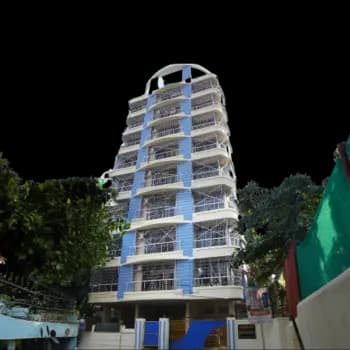
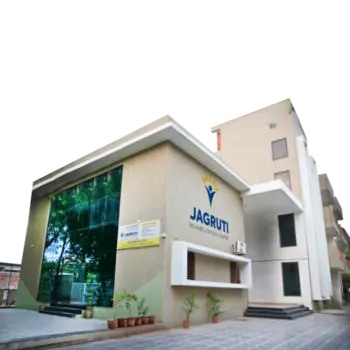
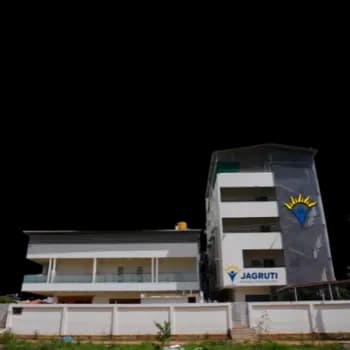
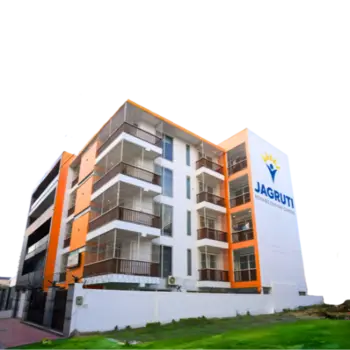
rTMS treatment is currently offered at different locations of Jagruti Rehabilitation Centre. It is offered as part of Jagruti's psychiatric services rather than as a standalone procedure, so it sits alongside the care you may already be receiving. If you are on medication or in therapy when you start, that usually continues, and your psychiatrist reviews how the two work together.
Every patient is assessed before treatment begins. The psychiatrist leading your care reviews your history, your response to previous medicines and any factors that affect safety, then explains whether rTMS is suitable and what the course would involve. If it is not the right option for you, the team will say so and discuss alternatives.
To arrange an assessment or ask about rTMS at Jagruti Rehabilitation Centres, call us on +91 9822207761 or use the contact form on this page.
Frequently Asked Questions
Does rTMS hurt?
Can I continue my medicines during rTMS?
How soon will I notice the results?
Can I go to work after a session?
Is rTMS the same as shock treatment (ECT)?
How long does each rTMS session take?
How much does rTMS cost at Jagruti Rehabilitation Centre?
Is rTMS available for OCD?
How do I book an assessment?
Reviewed By & References
Written & Medically Reviewed By:
Dr. Amar Shinde, Senior Psychiatrist (M.B.B.S, D.P.M, F.I.P.S.) with 23+ years of experience
Last Updated: 28 October 2026
Reference
[1] National Institute for Health and Care Excellence. (2015). Repetitive transcranial magnetic stimulation for depression (Interventional Procedures Guidance No. IPG542). Available at: https://www.nice.org.uk/guidance/htg396
[2] Lefaucheur, J.-P., Aleman, A., Baeken, C., Benninger, D. H., Brunelin, J., Di Lazzaro, V., Filipović, S. R., Grefkes, C., Hasan, A., Hummel, F. C., Jääskeläinen, S. K., Langguth, B., Leocani, L., Londero, A., Nardone, R., Nguyen, J.-P., Nyffeler, T., Oliveira-Maia, A. J., Oliviero, A., … Ziemann, U. (2020). Evidence-based guidelines on the therapeutic use of repetitive transcranial magnetic stimulation (rTMS): An update (2014-2018). Clinical Neurophysiology, 131(2), 474-528. Available at: https://pubmed.ncbi.nlm.nih.gov/31901449/
[3] Rossi, S., Antal, A., Bestmann, S., Bikson, M., Brewer, C., Brockmöller, J., Carpenter, L. L., Cincotta, M., Chen, R., Cohen, L. G., Di Lazzaro, V., Ferreri, F., Filipović, S. R., Fregni, F., George, M. S., Hamilton, R., Hamani, C., Ilmoniemi, R. J., Jaberzadeh, S., … Hallett, M. (2021). Safety and recommendations for TMS use in healthy subjects and patient populations, with updates on training, ethical and regulatory issues: Expert guidelines. Clinical Neurophysiology, 132(1), 269-306. Available at: https://pmc.ncbi.nlm.nih.gov/articles/PMC9094636/
[4] Canadian Network for Mood and Anxiety Treatments. (2024). Canadian Network for Mood and Anxiety Treatments (CANMAT) 2023 update on clinical guidelines for management of major depressive disorder in adults. The Canadian Journal of Psychiatry, 69(9), 641-687. Available at: https://journals.sagepub.com/doi/10.1177/07067437241245384
[5] Gaynes, B. N., Lux, L. J., Lloyd, S. W., Hansen, R. A., Gartlehner, G., Keener, P., Jonas, D. E., Villasim, M., & Lohr, K. N. (2011). Nonpharmacologic interventions for treatment-resistant depression in adults (Comparative Effectiveness Review No. 33; AHRQ Publication No. 11-EHC056-EF). Agency for Healthcare Research and Quality. Available at: https://www.ncbi.nlm.nih.gov/books/NBK65315/
Disclaimer:
All treatment follows assessment by a psychiatrist at Jagrutii Rehab Centre Private Limited (JRCPL) psychiatrist. Results vary from person to person. Research programmes need separate consent and ethics approval.