
Rehabilitation Centre in Chandigarh
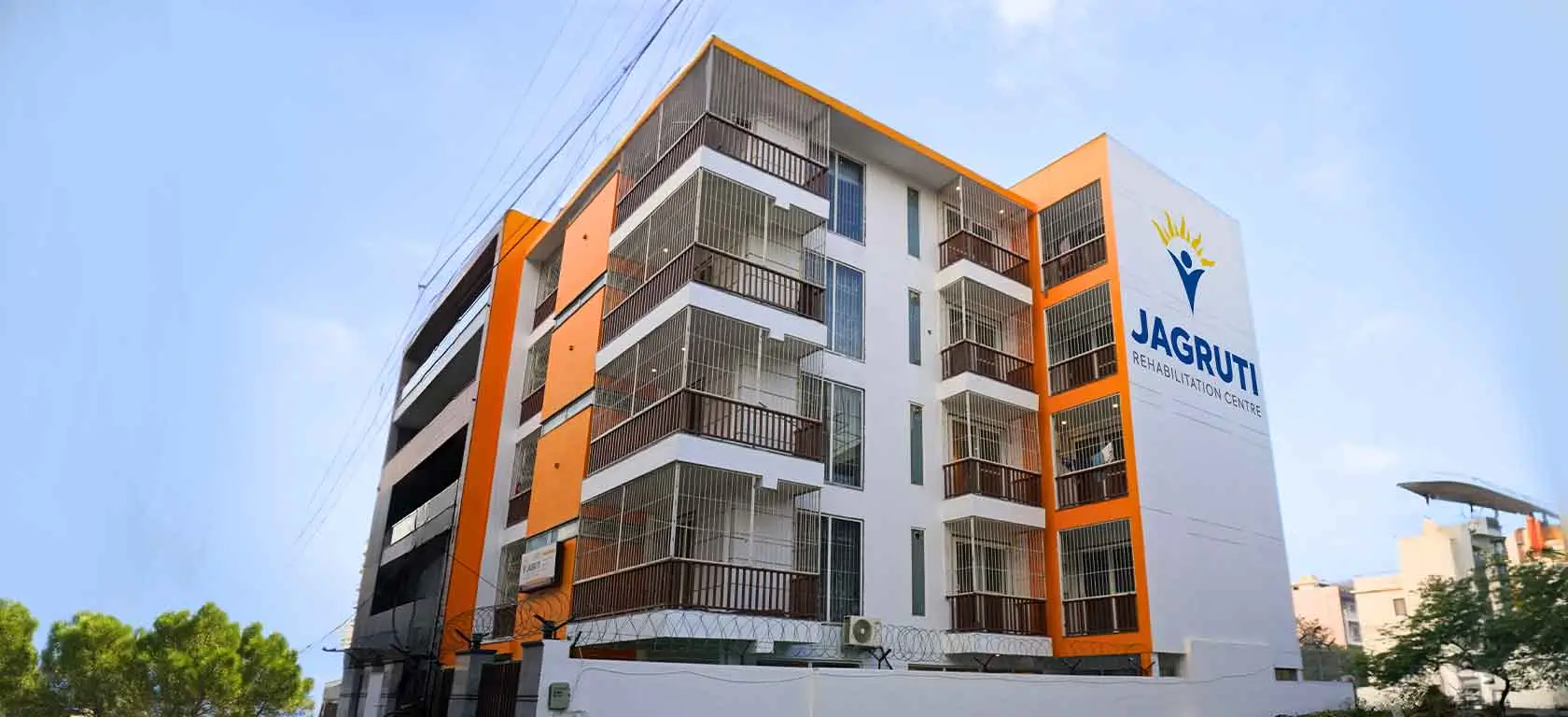
Rehabilitation Centre in Chandigarh: Structured Treatment for Families from Chandigarh
Chandigarh was designed so that everything has its place, with planned sectors, markets, schools, and hospitals. Addiction does not respect that design. It finds its way into the gaps: the evening drink that became the morning one, the prescription that stopped being about pain, the substance that moved from occasional to daily without anyone deciding it would.
If you are searching for a rehabilitation centre in Chandigarh, you have already noticed something that does not fit the plan. Maybe you are the person using it, and you are reading this on your phone late at night. Or maybe you are the parent, spouse, or sibling who has been quietly holding a house together while watching someone you love slip further away. Either way, you are here, and that is a reasonable place to start.
Our closest residential facilities are in Delhi-NCR (Delhi, Gurgaon, and Noida) and families from Chandigarh and the surrounding region travel there for psychiatrist-led, residential addiction treatment. The trip is real, and it takes planning. It is also more manageable than you might think, and we will walk you through it honestly when you are ready.
Ask us how admission at Jagruti works from Chandigarh.
Call Now→What Substance and Alcohol Use Looks Like in Chandigarh
The most detailed Chandigarh-specific data comes from a household survey by PGIMER's psychiatry department, covering 2,000 people across urban and rural sectors. It found lifetime substance use at 21.26% of households and current use at 6.55% [1]. Alcohol was the most common substance, followed by tobacco and opioids.
In that survey, substance users were more likely to be married, employed, and from higher-income households. The person drinking daily may still be holding a job and paying bills. The one using opioids may look functional to everyone outside the immediate family.
That gap between appearance and reality is one reason treatment gets delayed. The other is that very few people here ever seek help. In the same survey, only 3.78% of substance users had ever sought treatment. A separate rapid assessment survey in Chandigarh found that while most users had tried to stop on their own at some point, only about a third had sought any formal support.
A 2024 study of 1,634 adolescents aged 13 to 19 in Chandigarh put the overall prevalence of addictive behaviours at 19.1%, broken down as current smoking 6%, alcohol use 6.1%, and drug use 7% [2]. The behaviours tracked together: adolescents with a higher risk score were significantly more likely to smoke, drink, and use drugs, suggesting that where one behaviour appears, others are likely nearby.
Find out if residential treatment is the right next step.
Call Now→Why Travelling Out of Chandigarh Helps
A reasonable place to start for most families in Chandigarh is to try something local first, such as a GP visit, a counsellor, or a short course of OPD consultations. What it does not change is the environment the person goes home to each evening.
That is the part a residential programme can change.
Where Cravings Live
A craving rarely arrives without a cue. The walk through a sector market on the way home, the colleague who drinks after shift, the Sunday call from the same friend. These links build quietly over months and fire on their own, often before the person has decided anything. When treatment sits inside the same city, those cues stay within reach. A residential programme in Delhi-NCR puts them out of range for the duration of treatment.
What Fills the Day Instead
Removing triggers is only half of it, the other half is what takes their place. At our centres, the day runs on a fixed rhythm, and the routine itself becomes the new pattern.
Privacy in a Small City
Chandigarh is small enough that circles overlap. Neighbours know each other across sectors, professional networks are tight, and news moves quickly. That closeness is one of the city's best qualities, and it is also why some families hesitate. Being seen walking into a rehab is a real concern here in a way it might not be in a larger, more anonymous city. Treatment in Delhi-NCR removes that concern. There is no one from your sector, your workplace, or your extended family likely to be there.
A Trip Families Here Already Understand
The city sits at the junction of three states, and people here are accustomed to care that involves crossing a border. A residential admission in Delhi-NCR follows a route many homes in and around Chandigarh have travelled before for other reasons.
Map out what the first trip from Chandigarh involves.
Call Now→Treatment Routes from Chandigarh: Government, Private, and Jagruti Delhi-NCR Centres
Chandigarh has government de-addiction services. It also has private centres, and it has families who travel to Delhi-NCR for residential care. Each route does something different, and knowing what each one actually offers makes the choice less confusing.
Government Services in Chandigarh
Chandigarh's government de-addiction services sit in four places. PGIMER runs the city's oldest programme, an OPD, and a community clinic at Kharar [3].
GMCH-32's psychiatry department runs a drug de-addiction clinic and registers over 3,000 patients a year [4].
GMSH-16 reopened its Drug De-addiction and Treatment Centre in January 2026 [5]. Sector 18 has a centre run by the NGO SPYM on land allotted by the UT administration [6].
These services are genuine and help many people. Personalized residential treatment with psychiatric oversight every day is a separate kind of service, covered by the next two routes.
Private Centres: What to Compare
Private de-addiction centres in Chandigarh operate across a wide range. Directory listings suggest basic shared accommodation starts somewhere between ₹12,000 and ₹15,000 per month, with premium facilities charging well above ₹1,00,000 per month.
What separates them is practical: whether detox happens on-site, whether a psychiatrist is present daily or on scheduled visits, how many patients each staff member handles, whether the centre is licensed under the Mental Healthcare Act 2017, and what aftercare exists after discharge.
Jagruti's Delhi-NCR Centres
Jagruti's Delhi-NCR network runs on one clinical model across all three centres, and it answers the question most families are asking when they search for the best rehabilitation centre in Chandigarh. The psychiatrist who assesses your family member stays with them through the programme rather than handing over to a visiting consultant. Family therapy sits in the weekly schedule, not on the side. Where addiction and a mental health condition appear together, one team handles both. A written aftercare plan is prepared before discharge, with follow-up at the 30, 60, and 90 day
The psychiatrist who assesses your family member stays with them through the programme rather than handing over to a visiting consultant. Family therapy sits in the weekly schedule, not on the side. Where addiction and a mental health condition appear together, one team handles both. A written aftercare plan is prepared before discharge, with follow-up at the 30, 60, and 90 day marks.
Noida: B-17, Sector 30, near Noida City Centre Metro Station. A 65-bed psychiatric hospital established in 2022, with full-time psychiatrists on site every day.
Delhi: Naraina, West Delhi, next to PVR Naraina.
Gurgaon: Sector 42, close to Golf Course Road. A 100-patient residential facility.
Weigh a rehab in Chandigarh against what our Delhi-NCR centres offer.
Call Now→How Families from Chandigarh Reach Our Delhi-NCR Centres
Getting to Our Noida Centre from Chandigarh
Our Noida centre is at B-17, Sector 30, near Noida City Centre Metro Station.
| From Chandigarh | Approx Distance | Best Option | Approx Time |
|---|---|---|---|
| By train | 250-270 km | Train from Chandigarh to New Delhi (NDLS), then take metro to Noida City Centre | 3h 15m-3h 40m by train, plus 45-60 minutes by metro |
| By flight | ~235 km (air) | Fly from Chandigarh (IXC) to Delhi (DEL), then cab or metro to Noida | 55 min-1h 15m in the air, plus 1-1h 15 min to Noida |
| By road | 260-280 km | Drive via NH-44 and Noida-Greater Noida Expressway | 4 h 30 min-5 hours |
Getting to Our Delhi Centre from Chandigarh
Our Delhi centre is in Naraina, West Delhi, next to PVR Naraina.
| From Chandigarh | Approx Distance | Best Option | Approx Time |
|---|---|---|---|
| By train | 240-270 km | Train from Chandigarh to New Delhi (NDLS), then metro to Naraina Vihar | 3h 15min-3h 40min by train, plus 30-40 minutes by metro |
| By flight | ~235 km (air) | Fly from Chandigarh (IXC) to Delhi (DEL), then cab to Naraina | 55 min-1h 15min in the air, plus 30-40 minutes by cab |
| By road | 250-260 km | Drive via NH-44 | 4-5 hours |
Getting to Our Gurgaon Centre from Chandigarh
Our Gurgaon centre is in Sector 42, close to Golf Course Road.
| From Chandigarh | Approx Distance | Best Option | Approx Time |
|---|---|---|---|
| By train | 270-290 km | Train from Chandigarh to Gurgaon, then cab to Sector 42 | 3h 30min-4 hours by train, plus 15-20 minutes by cab |
| By flight | ~235 km (air) | Fly from Chandigarh (IXC) to Delhi (DEL), then cab to Gurgaon | 55 min-1h 15min in the air, plus 40-60 minutes by cab |
| By road | 270-290 km | Drive via NH-44 and Outer Ring Road | 4h 30min-6 hours |
Route notes
No direct train runs to Noida or to Naraina. For both, you travel to Delhi first and continue by metro or cab. Gurgaon has direct train services from Chandigarh, which makes it the simplest rail option of the three.
Weekly visits from Chandigarh are not practical, so the programme keeps families involved through scheduled phone updates and family therapy sessions.
Check which of our three centres makes the simplest journey from Chandigarh.
Call Now→What Treatment at Jagruti Chandigarh Looks Like
What the Day Actually Looks Like
Treatment runs on a fixed timetable. Sleep and meals happen at set hours, therapy sits in the morning and afternoon blocks, and clinical reviews happen on a schedule rather than when something goes wrong. Family sessions are timetabled rather than fitted in around the programme.
The Assessment That Sets the Plan
Admission starts with a psychiatric assessment rather than paperwork. The psychiatrist takes a full history, and you are asked to sit in, because what you have seen over the years fills gaps your family member cannot. The session ends with a written plan covering duration, therapy schedule, and visiting days.
The First Two Weeks
Most admissions begin with medically supervised detoxification, managed inside the centre by the nursing team rather than at an outside hospital. This usually runs seven to fourteen days, depending on the substance and how heavy the use has been. Detox clears the physical ground so therapy can take hold.
Therapy: What Changes in the Thinking
Once stabilised, your family member enters the working phase. Cognitive Behavioural Therapy targets thought patterns, individual counselling covers personal history, and group sessions connect them with others in the same position. Where addiction and a mental health condition appear together, the same team treats both during the same admission rather than splitting the care.
How Long It Runs
Programme length is decided after the assessment, and usually runs for 30, 60, or 90 days. A shorter stabilisation of about a week is available for crisis situations, with outpatient care afterwards. If there have been relapses before, or a dual diagnosis is involved, the clinical team may recommend a longer stay.
After Discharge
Before your family member leaves, the team prepares a relapse prevention plan shaped around their triggers and the home environment they are returning to. Follow-up calls help to check how things are holding and adjust the plan if needed. Family sessions can continue for a few months after discharge.
Talk through what the first month involves before you commit to anything.
Call Now→Local Resources and Helplines in Chandigarh
If you are still gathering information about a drug rehabilitation centre in Chandigarh, these are the local and national services that can help. None of them replace a proper clinical assessment, but they give you somewhere to start.
Chandigarh Facilities
PGIMER Drug De-addiction and Treatment Centre (DDTC)
Department of Psychiatry, PGIMER, Sector 12, Chandigarh [3].
GMCH-32 Drug De-addiction Clinic
Psychiatry department, GMCH, Sector 32, Chandigarh [4].
GMSH-16 Drug De-addiction and Treatment Centre (DDTC)
GMSH, Sector 16, Chandigarh [5].
Sector 18 Drug De-addiction and Rehabilitation Centre
Government Press Building, Sector 18, Chandigarh [6].
Helplines
Tele-MANAS (14416 or 1-800-891-4416)
The national tele-mental health programme, operating from GMCH-32 in
Chandigarh as the regional coordinating centre. Free, confidential,
24/7 counselling in multiple languages [7].
MANAS National Narcotics Helpline (1933)
India's national narcotics helpline under the Narcotics Control
Bureau, Ministry of Home Affairs. For reporting drug trafficking,
illegal cultivation, or related crimes [8].
Asha Helpline (0172-2735436 / 0172-2735446)
A Chandigarh-specific mental health helpline operating Monday to
Saturday, 8 am to 7 pm [9].
What These Numbers Can and Cannot Do
These services do different jobs. Helplines give immediate support, information about treatment options, and a way to report drug-related activity. Government hospitals offer clinical care, often at low or no cost. Comprehensive & personalized residential rehabilitation with daily psychiatric oversight is a separate kind of service, and that is where a residential centre becomes relevant. Which one fits your situation depends on how much daily supervision is needed.
Talk to our admission team about which level of care suits you or your loved one.
Call Now→Frequently Asked Questions
Does Jagruti run a rehabilitation centre in Chandigarh?
How do we choose the best de addiction centre in Chandigarh?
What does treatment cost at Jagruti's Delhi-NCR centres?
How long does the programme usually run?
Can family be involved if we live in Chandigarh?
Does my family member have to agree to go?
How is privacy handled at Jagruti's centres?
Is a rehab centre in Chandigarh enough if my family member has relapsed before?
How do we plan the trip from Chandigarh?
What if my family member needs drug rehabilitation but we live in Chandigarh?
Can I speak to someone at Jagruti before deciding on admission?
What if an emergency comes up at home while my family member is in treatment?
Does Jagruti treat both alcohol and drug addiction at the same centre?
How do we handle the trip if my family member is unwilling to travel?
Is there a difference in care between Jagruti's Noida, Delhi, and Gurgaon centres?
Get an appointment for
free consultation
References
[1] Avasthi, A., Basu, D., Subodh, B. N., Gupta, P. K., Malhotra, N., Rani, P., & Sharma, S. (2017). Substance use and dependence in the Union Territory of Chandigarh: Results of a household survey using a multistage stratified random sample. Indian Journal of Psychiatry, 59(3), 275-283. https://pmc.ncbi.nlm.nih.gov/articles/PMC5659076/
[2] Rana, M., Gupta, M., Aloona, S., & Bhardwaj, M. (2024). Prevalence and correlates of addictive behaviours among adolescents in Chandigarh, North India. Journal of Substance Use, 29(5), 807-814. https://doi.org/10.1080/14659891.2023.2250859
[3] Postgraduate Institute of Medical Education and Research. (n.d.). Postgraduate Institute of Medical Education and Research, Chandigarh. https://pgimer.edu.in/PGIMER_PORTAL/PGIMERPORTAL/home.jsp
[4] Government Medical College and Hospital, Chandigarh. (n.d.). Overview. https://gmch.gov.in/overview-12
[5] Express News Service. (2025, January 2). Drug de-addiction centre in GMSH-16 to reopen this year. The Indian Express. https://indianexpress.com/article/cities/chandigarh/drug-de-addiction-centre-in-gmsh-16-to-reopen-this-year-9755658/
[6] Society for Promotion of Youth and Masses. (n.d.). Substance use prevention & treatment. https://spym.org/substance-use-prevention-treatment/
[7] Tele-MANAS, Ministry of Health and Family Welfare, Government of India. (n.d.). Tele-MANAS. Available at: https://telemanas.mohfw.gov.in/
[8] Ministry of Home Affairs. (2025, August 6). National narcotics helpline 'MANAS' (Press Release ID: 2153181). Press Information Bureau, Government of India. https://www.pib.gov.in/PressReleasePage.aspx?PRID=2153181
[9] Find A Helpline. (n.d.). Helplines in Chandigarh, India. https://findahelpline.com/countries/in/ch
Medical Disclaimer
This page describes treatment in general terms. Decisions about addiction care should be made with a qualified clinician who has assessed the person directly. Jagruti Rehabilitation Centre publishes this content under the clinical supervision of Dr. Amar Shinde (MBBS, DPM, FIPS), Senior Psychiatrist.
Nothing Has to Be Decided Before One Call
This is not a decision anyone expects you to make in one go. If a conversation would help, Jagruti's admission team is available to answer questions about treatment, cost, and the trip from Chandigarh.