
Rehabilitation Centre in Varanasi
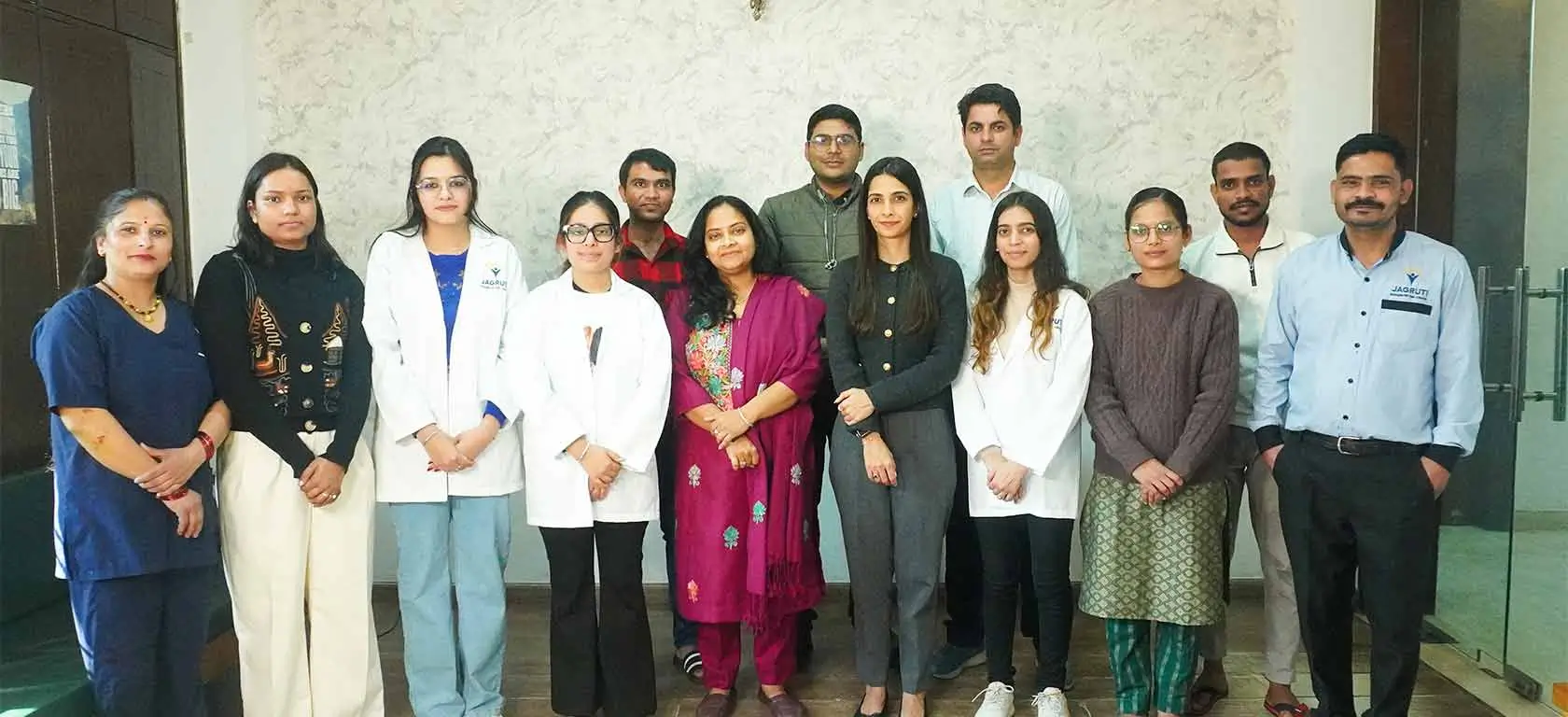
Rehabilitation Centre in Varanasi: Residential Care for You or Someone You Care About
Most people don't come to us after one bad night. They come after months of “I've got it under control,” and a quiet sense that they don't. If the problem of drinking or drug use is yours, or of someone you love, you don't have to wait for it to get worse before you reach out.
They start with small, practical questions: Is this serious enough for treatment? What does a de addiction centre in Varanasi actually do? What will it cost, and who will need to be involved? A good answer begins with an assessment by a psychiatrist, because addiction and a mental health condition sometimes need to be treated together.
For a family in Varanasi, the practical question is not whether a treatment network exists but which level of care fits. While travelling from Varanasi, the residential centres in Delhi-NCR (Delhi, Gurgaon, and Noida) are the ones to consider first within Jagruti's network. Jagruti rehabilitation care began in 2008 under Dr. Amar Shinde and today includes 17+ centres, 40+ doctors, and more than 82,000 people treated.
The programme begins with a full psychiatric assessment, moves into medically supervised detoxification inside the centre, and then settles into structured therapy through the day. Family involvement is built into the weekly schedule, and before discharge you receive a written plan for what comes next. The psychiatrist who carries out the assessment stays part of the treating team through the programme.
One conversation often makes the next step clearer for you or your family member.
Call Now→How Alcohol and Substance Use Show Up in Varanasi and the Purvanchal Belt
Varanasi is often described as a city where tradition holds strong. The data tells a more complicated story. Studies from the district and the wider Purvanchal region show that alcohol and other substance use are present across age groups and backgrounds, not confined to one part of the city or one kind of household.
A 2018 community-based study in the Chiraigaon block of rural Varanasi district surveyed 201 adults [1]. It found that 15.9% were current alcohol consumers, and 46.3% used tobacco. Among the alcohol users, 31 out of 32 also used tobacco, a pattern that shows how often these substances travel together.
A larger 2025 study published in Nicotine & Tobacco Research looked at over 10,000 adults in rural Varanasi district who were part of a high-risk cohort for oral cancer [2]. More than half of the study population 55.7% had used at least one substance. What these studies describe is a pattern that moves across the district: rural and urban, younger and older, men and women in different proportions.
At the state level, the National Family Health Survey (NFHS-5) recorded current alcohol use among men in Uttar Pradesh at 14.5%, against 0.3% among women [3]. A more recent round of the survey, NFHS-6, put the figure for men at 18.7%, an increase from the earlier round. These are state figures, not Varanasi-specific, but they show the direction the state is moving in.
If any of this sounds familiar, call us.
Call Now→Why Leaving Varanasi for Treatment Changes the Recovery Process
The Pull of a Familiar City
For most families in Varanasi, daily life is woven tightly together. The workplace is often a short walk from home and the extended family lives in the same neighbourhood or the next one over. None of this is a problem in itself but it becomes one when someone is trying to build a new routine while everything around them stays the same.
What Distance Actually Changes
The opening weeks of recovery run on repetition: consistent sleep, consistent meals, therapy at set hours, and clinical supervision at every step. At home, that repetition has to compete with everything else that fills the day. Building a new pattern inside that environment is possible, but it takes more effort than most people can sustain in early recovery.
Travelling to Delhi-NCR removes that problem. The distance is not small as it is roughly 670 km by air, around 800 km by road, and train journeys that run anywhere from 8 to 16 hours depending on the service. What the distance does is strip away the familiar pulls. The first weeks are not spent walking past the same spots or answering to the same expectations. They are spent inside a programme where the daily rhythm is set by the clinical team.
Families Stay Involved
What families hesitate over most is the distance, and that hesitation is reasonable. What the distance does is give the early weeks a routine that would be difficult to build at home. That does not put you on the sidelines. Weekly family therapy sessions and regular clinical updates keep you connected without needing to be physically present every week.
Plan the journey with our admission team before you decide.
Call Now→Your Treatment Options in Varanasi
Public Care in Varanasi: What It Offers
Varanasi has public de-addiction services, and they are worth knowing about. The Department of Psychiatry at Sir Sunderlal Hospital, Banaras Hindu University, runs a de-addiction centre (Mahamana Jyoti Kendra) as part of its psychiatry services [4]. The hospital serves as the tertiary care centre for eastern Uttar Pradesh.
The District Mental Health Programme places a psychiatrist at the district hospital level for outpatient psychiatric care. The UP Prohibition and Social Upliftment Department also lists two state-supported Nasha Mukti Kendras in the Varanasi region [5].
Public services provide affordable access and clinical expertise. A bed on the day you call, a psychiatrist on-site every day, and family work written into the weekly schedule are more typically found in private residential care.
Private Rehab in Varanasi: What to Compare
If you are looking for the best rehab centres in Varanasi, the private options offer residential programmes, detox support, and counselling services. Costs vary with basic programmes that start around ₹10,000 to ₹15,000 per month, with higher charges for private rooms or more intensive medical care. What separates one centre from another is how much psychiatric attention your family member receives, whether a psychiatrist is part of the daily schedule, or whether the centre depends on visiting consultants. For families who need daily psychiatric presence and therapy written into the week, that level of care is what Jagruti's rehab centres are built around.
Jagruti's Delhi-NCR Centres: Delhi, Gurgaon, Noida
For families from Varanasi, the Delhi-NCR cluster is the closest option within Jagruti's network. The three centres share the same clinical model but differ in setting and capacity.
The Delhi centre is in Naraina, West Delhi, next to PVR Naraina. Our Noida centre is in sector 30, close to Noida City Centre Metro Station. It opened in 2022 and has 65 inpatient beds. The Gurgaon centre is in sector 42, Gurugram. It has accommodation capacity for 100 patients.
Across all three, psychiatrists are part of the daily routine rather than visiting on set days. Detoxification is handled inside the centre and dual diagnosis care is also available. Family therapy is built into the weekly schedule, and you receive regular clinical updates.
Weighing local care against the Delhi-NCR centres?
Call Now→The Journey from Varanasi to Delhi-NCR Centres
Before you plan anything, it helps to know what the journey actually involves. From Varanasi, Delhi-NCR is a full day of travel at minimum. The tables below cover each of our three centres separately, and how to reach from the airport or station to the centre.
Getting to Our Delhi Centre (Naraina)
Our Delhi centre is in Naraina, West Delhi, next to PVR Naraina.
| From Varanasi | Distance | Best Option | Approx Time |
|---|---|---|---|
| By road | 750-800 km | Drive through NH19 and Agra-Lucknow Expressway, then take Yamuna Expressway to Naraina | 10-12 hours depending on traffic and stops |
| By train | 750-780 km | Trains from Varanasi Junction (BSB) to New Delhi (NDLS), then auto or cab to Naraina | 8-16 hours by train, plus 30-40 minutes to Naraina |
| By flight | 667 km (air) | Fly from Varanasi (VNS) to Delhi (DEL), then cab to Naraina | 1h 25m to 1h 55m in the air, plus airport transfers and 30-40 minutes to Naraina |
Getting to Our Noida Centre
Our Noida centre is in Sector 30, near Noida City Centre Metro Station.
| From Varanasi | Distance | Best Option | Approx Time |
|---|---|---|---|
| By road | 750-790 km | Drive via NH19 and Agra-Lucknow Expressway, then Noida-Greater Noida Expressway to Sector 30 | 9-12 hours depending on traffic and stops |
| By train | 760 km (to New Delhi) | Train from Varanasi Junction (BSB) to New Delhi (NDLS) or Anand Vihar Terminal (ANVT), then metro to Noida City Centre | 8-16 hours by train, plus 40-50 minutes by metro |
| By flight | 667 km (air) | Fly from Varanasi (VNS) to Delhi (DEL), then cab or metro to Noida | 1h 25m-1h 55m in the air, plus 1-1.5 hours to Noida |
Getting to Our Gurgaon Centre
Our Gurgaon centre is in Sector 42, close to Golf Course Road.
| From Varanasi | Distance | Best Option | Approx Time |
|---|---|---|---|
| By road | 780-810 km | Drive via NH19 and Agra-Lucknow Expressway, then Yamuna Expressway and Outer Ring Road or MG Road to Sector 42 | 9-12 hours depending on traffic and stops |
| By train | 760-780 km (to New Delhi) | Trains from Varanasi Junction (BSB) to New Delhi (NDLS), then change for Gurgaon | 8-16 hours by train, plus 25-30 minutes by cab to Gurgaon |
| By flight | 667 km (air) | Fly from Varanasi (VNS) to Delhi (DEL), then cab to Gurgaon | 1h 25m-1h 55m in the air, plus 40-60 minutes to Gurgaon |
Nonstop flights from Varanasi to Delhi run through the day, with four airlines operating the route from morning until late evening.
Weekly visits are not practical from Varanasi. What the programme offers instead is scheduled family therapy sessions and regular clinical updates by phone, so you remain involved without making the trip every week.
Have questions about the journey or how visits work?
Call Now→What Treatment at Jagruti Varanasi Looks Like
Before Treatment Begins
The psychiatrist's first job is to understand the full picture, not just the substance. That means asking what has been used, for how long, how sleep and appetite have been affected, and whether any other medical condition is in play.
Detox and Stabilisation
For most patients, the first phase is medically supervised detoxification, handled by the nursing team inside the centre. This usually runs seven to fourteen days, depending on the substance and how heavy the use has been. Detox on its own does not resolve addiction. It settles the body so that therapy can work. Until that happens, counselling and group sessions do not hold.
Therapy and the Daily Routine
Once stable, the day moves into a fixed pattern. Mornings begin with yoga or meditation, followed by breakfast and a group session where patients share thoughts and receive feedback. Individual counselling is scheduled according to each person's plan. Afternoons include outdoor activity such as games, walking, art, and evenings close with dinner and rest.
Cognitive Behavioural Therapy (CBT) and Dialectical Behaviour Therapy (DBT) are used to identify the thinking patterns that lead back to substance use. Group sessions put patients alongside others dealing with similar struggles. Wellness activities and physical recreation are built into the weekly routine rather than treated as add-ons.
How Family Stays in the Loop
You attend a dedicated family session every week and receive regular clinical updates. The programme is built to include family members where it is clinically appropriate, so that the home environment is prepared for what comes after discharge.
How Long Treatment Runs
Programmes run for 30, 60, or 90 days. A shorter stabilisation of seven to ten days is available for crisis situations, followed by outpatient care. The clinical team recommends a duration after the full assessment. Where substance use overlaps with a mental health condition, the same psychiatric team treats both during the same admission.
Planning for Discharge
Before your family member leaves, the team builds a relapse prevention plan around their specific triggers, their home situation, and the environment they are returning to. Follow-up calls are scheduled at 30, 60, and 90 days to review medication, watch for early warning signs, and adjust the plan where required. Family counselling continues for months after discharge.
Want to know how the weekly family sessions work in practice?
Call Now→Local Resources and Helplines in Varanasi
Varanasi has public options for de-addiction and mental health support, and knowing what each one actually provides saves time. Below are the government facilities in the city, followed by the helplines that operate across the state.
Government Facilities in Varanasi
The Department of Psychiatry at Sir Sunderlal Hospital, Banaras Hindu University, runs outpatient psychiatry services and a de-addiction centre (Mahamana Jyoti Kendra). It serves as the tertiary referral hospital for eastern Uttar Pradesh [4].
Mental Hospital Varanasi is the city's government mental hospital and runs an Addiction Treatment Facility project offering free counselling and medical consultation, supported by the Ministry of Social Justice and NDDTC, AIIMS [6].
There are two state-supported Nasha Mukti Kendras operating in the city under the UP Prohibition and Social Upliftment Department [5]. Both provide counselling and rehabilitation services.
Helplines
Among the helplines, Tele MANAS (14416 or 1800-891-4416) offers free and confidential counselling at any hour, in multiple languages [7].
The MANAS National Narcotics Helpline (1933), run by the Narcotics Control Bureau under the Ministry of Home Affairs, provides guidance and takes reports of drug-related activity [8].
The UP Anti-Narcotics WhatsApp number (8756128434) allows confidential reporting of illegal drug activity in the state [9].
What Public Services Can and Cannot Do
These services do what they are built to do: guide you, let you report drug-related activity, and tell you what public treatment exists in Varanasi.
If daily psychiatric supervision is what your family member needs, it usually means a private facility like Jagruti.
Still working out whether a helpline or a residential programme is the right next step? We can help you decide.
Call Now→Frequently Asked Questions
Do you have a rehab centre in Varanasi?
How do we choose the best rehabilitation centre in Varanasi?
What does an alcohol rehabilitation centre in Varanasi actually involve?
My family member refuses to go to rehab. What can we do?
How do visits work if we live in Varanasi?
How is confidentiality handled if we come from Varanasi?
Do you treat women at your Delhi-NCR centres?
Can admission happen the same day we call from Varanasi?
What if my family member has a mental health condition along with the addiction?
What happens after treatment ends and we return to Varanasi?
Which substances do you treat at your centres?
What should we budget for treatment at Jagruti's Delhi-NCR centres?
What if something goes wrong at home while treatment is ongoing?
My family member has been treated before and relapsed. What now?
We are not from Varanasi city. We live in a nearby district. Can you still help?
Get an appointment for
free consultation
References
[1] Richa, Ahmad, S., Singh, G. P., & Mishra, C. P. (2018). Prevalence and predictors of tobacco and alcohol use among adults in rural area of Varanasi district. International Journal of Medical Science and Public Health, 7(5), 354-358. Available at: https://doi.org/10.5455/ijmsph.2018.0204812022018
[2] Shruti, T., Sharma, P., Khanna, D., Ranjan, S., Khan, A., Gurushanth, K., Singh, A. G., Mishra, A., Shetty, A., Birur, P., & Chaturvedi, P. (2025). Prevalence and patterns of polysubstance use (tobacco and other substances) and associated factors: A cross-sectional analysis in a high-risk cohort for oral cancer in Varanasi, India, with a special focus on young emerging adults. Nicotine & Tobacco Research, 27(8), 1349-1358. Available at: https://doi.org/10.1093/ntr/ntae307
[3] International Institute for Population Sciences (IIPS) & ICF. (2021). National Family Health Survey (NFHS-5), 2019-21: India. IIPS. Available at: https://dhsprogram.com/pubs/pdf/FR375/FR375.pdf
[4] Banaras Hindu University, Department of Psychiatry. (n.d.). Department of Psychiatry. Available at: https://www.bhu.ac.in/site/UnitHomeTemplate/1_116_956
[5] Prohibition and Social Upliftment Department, Uttar Pradesh. (n.d.). Nasha Mukti Kendras: Details of Nasha Mukti Kendras operating in Uttar Pradesh. Available at: https://www.upmadyanishedh.in/institutions
[6] Mental Hospital Varanasi. (n.d.). ATF. Available at: https://mentalhospitalvaranasi.com/?page_id=2344
[7] Tele-MANAS, Ministry of Health and Family Welfare, Government of India. (n.d.). Tele-MANAS. Available at: https://telemanas.mohfw.gov.in/
[8] Ministry of Home Affairs. (2025, August 6). National narcotics helpline 'MANAS' (Press Release ID: 2153181). Press Information Bureau, Government of India. https://www.pib.gov.in/PressReleasePage.aspx?PRID=2153181
[9] Statesman News Service. (2025, December 5). UP government cracks down on illegal drugs; 128 firms booked for codeine misuse. The Statesman. Available at: https://www.thestatesman.com/india/up-government-cracks-down-on-illegal-drugs-128-firms-booked-for-codeine-misuse-1503522240.html
Medical Disclaimer
This page is published by Jagruti Rehabilitation Centre for general information. It is not medical advice, and it should not be used on its own to diagnose or treat any condition. Any decision about addiction treatment should follow a proper assessment by a qualified medical professional. Content is reviewed by our clinical team under the supervision of Dr. Amar Shinde (MBBS, DPM, FIPS), Senior Psychiatrist.
One Question Is Enough to Begin
You do not need to have this figured out before you reach out. Start with one question: about the programme, the journey from Varanasi, or whether residential care is the right level of support for you or your family member. The admission team will answer it plainly.