
Rehabilitation Centre in Patna
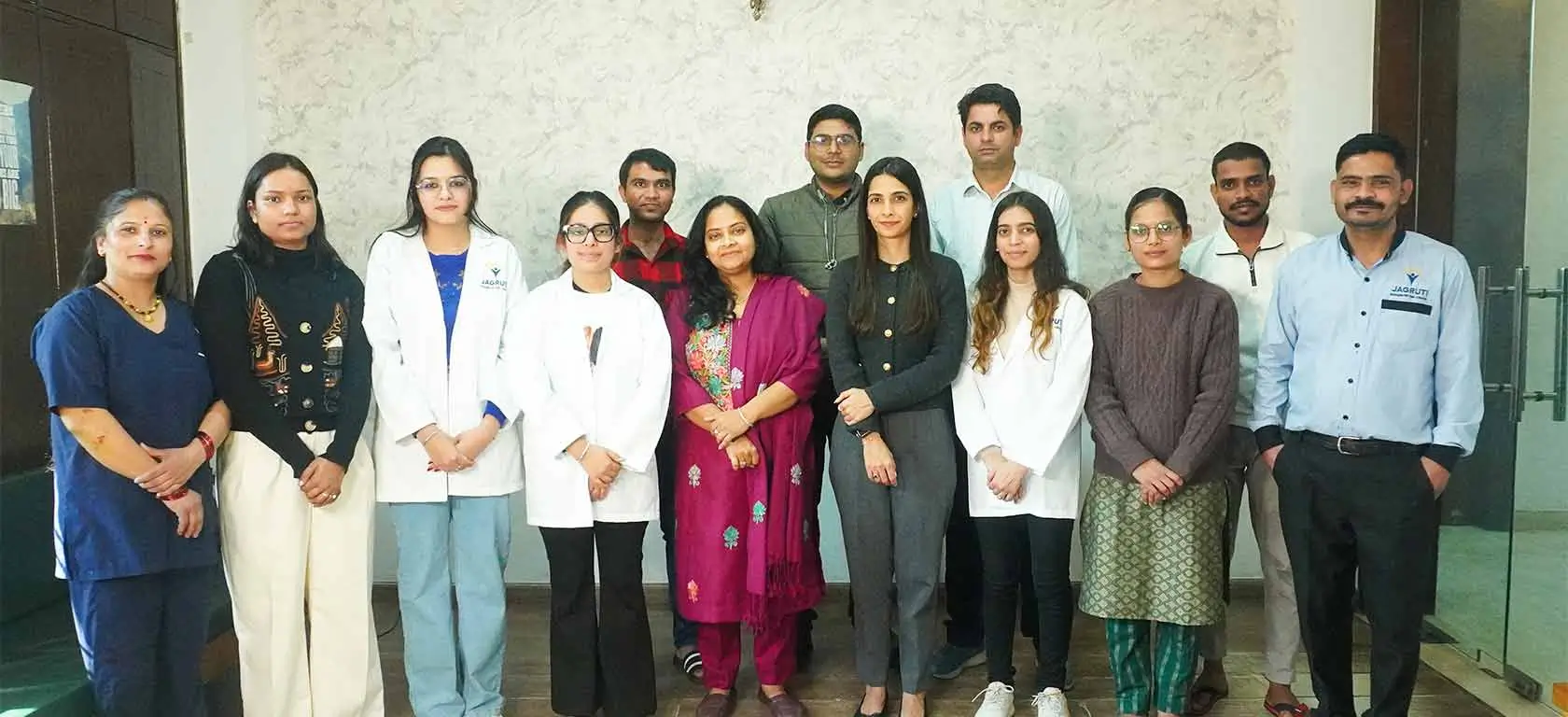
Rehabilitation Centre in Patna: A Residential Care for Families Across Bihar
Alcohol and drug use do not stay inside the person using them. In a Patna home, the first signs are usually practical rather than dramatic, and they rarely look like a crisis. Money goes missing in amounts small enough that nobody wants to make it an issue. Commitments begin slipping and the explanation offered is plausible enough that the family accepts it and moves on. If you are the one using, all of it will be familiar, and you may be the only one who knows how far it actually goes. By the time you or your family member starts searching for a rehabilitation centre in Patna, months have usually passed, and sometimes years.
That delay is understandable. Families here live with it quietly before they ask for help, and the first question is usually whether the drinking or the drug use is serious enough to act on.
How long it has been going on matters less than the kind of care underneath it. A psychiatrist who stays with the case from the first assessment through to the follow-up call after discharge. A daily routine that replaces the one built around drinking or drug use. A plan your family takes part in, not one you hear about afterwards.
Jagruti Rehabilitation Centre began in 2008 under Dr. Amar Shinde. Today the network includes 17+ centres, 40+ doctors, and more than 82,000 lives restored. Jagruti's psychiatrist-led residential centres in Delhi-NCR (Delhi, Gurgaon, and Noida) are the nearest option for families travelling from Patna. The admission team can explain how admission and family contact work before you commit to anything.
Tell the admission team what the last few months have looked like.
Call Now→What Substance and Alcohol Use Looks Like in Patna, Bihar
Bihar's relationship with alcohol changed in April 2016, when prohibition came into force. What the clinical evidence from Patna shows since then is a shift in the pattern and not the quantity of use.
A 2024 study of 372 patients in tertiary care settings across Bihar found opioid and cannabis use rose significantly in the years after 2016, with daily and weekly use intensifying [1]. The authors treat these as shifts that need closer study.
For Patna specifically, the clearest clinical data comes from an opioid substitution therapy (OST) centre in the city. A 2023 study of 268 men enrolled there between 2014 and 2022 found that 28% were hepatitis C positive, rising to 47.1% among those who had injected for more than ten years [2].
At the state level, the latest National Family Health Survey (NFHS-6, 2023–24) recorded alcohol use among 16.5% of men in Bihar aged 15 and above. Among rural men the figure was 17.1%; among urban men, 12.8% [3]. These are Bihar figures, not Patna figures, but they describe the wider environment a Patna household is part of.
The assessment has to look at what is actually being used, how it is being taken, and what else is going on medically. A plan built around alcohol alone will miss an opioid pattern. A plan that does not ask about injection use will miss the hepatitis C risk. The first step is an assessment broad enough to see the whole picture.
If you are worried about yourself or someone close to you, ask the admission team what a first assessment would cover.
Call Now→Why Treatment Away From Patna Changes the Clinical Picture
Two Levels of Care, Each Suited to a Different Situation
Not everyone reading this has already tried treatment in Patna. Some families are at the start of the search, before a single appointment has been made. Others have been through months of outpatient care and are trying to work out what was missing. Both are fair places to begin, and both come down to the same question: what level of care does this situation actually need?
Outpatient and residential care are two levels of the same system, and each suits a different situation. An OPD appointment gives you a psychiatrist's assessment, a prescription and a follow-up date. It works when someone can hold a routine at home, keep appointments, and has support around them between visits. Residential care is built for situations where that structure is not holding, and where the clinical team needs to see the person across consecutive days rather than at intervals.
How Daily Observation Reshapes the Plan
The continuity is what a residential programme is organised around. The psychiatrist who carries out the assessment remains on-site through the week. Nursing is present overnight. When sleep, appetite, mood or withdrawal symptoms shift, the plan is reviewed the same day. A 30, 60 or 90-day programme gives the team enough days to revise the plan as the picture becomes clearer.
What the Journey From Patna Involves
Delhi-NCR sits roughly 1,000 km from Patna. Overnight trains from Rajendra Nagar Terminal and Patna Junction cover it in around twelve hours, and flights take under two hours in the air before transfers at either end. The trip needs planning around work and family.
What residential care offers is a plan that gets reviewed while your family member is still in treatment, rather than at the next appointment. Travel is what allows the team consecutive days to observe and adjust it, with your family part of that process.
Ask the admission team which level of care your situation actually needs.
Call Now→Your Options for Treatment in Patna
Most families weighing treatment from Patna are choosing between public psychiatric care in the city, a private centre in Bihar, or a residential programme outside the state, and each asks something different of the family choosing it.
Government Facilities in Patna
Patna's government medical institutions: Patna Medical College Hospital, Nalanda Medical College Hospital and IGIMS, carry the city's public psychiatric and de-addiction load [4],[5]. These facilities are affordable and staffed by qualified psychiatrists. If a longer residential stay with daily psychiatric review is needed, the options below are worth comparing.
Private Rehab Centres in Patna
Some private rehab centres keep a psychiatrist on-site daily; others bring one in on set days and scale psychiatric oversight back once detox ends. Four questions are worth putting to any of them: whether detox happens inside the centre or at an outside hospital; how many patients one staff member carries; whether it holds a Mental Healthcare Act 2017 licence; and what happens in the months after discharge. Costs shift with room type, programme length and medical intensity, so ask for a written breakdown rather than a monthly figure.
Jagruti's Delhi-NCR Centres
Those four questions are fair to put to us too. Jagruti runs three psychiatrist-led residential centres, and for a family travelling from Patna, these are the closest options. The Delhi centre sits in Naraina, West Delhi. The Noida centre is in Sector 30, near Noida City Centre Metro Station, and the Gurgaon centre is in Sector 42, close to Golf Course Road. Across all three, the psychiatrist who assesses your family member stays part of the treating team through the programme rather than handing over to someone else. Detox happens inside the centre and family sessions are scheduled into the week. Where addiction and a mental health condition appear together, one team handles both.
If you are weighing a private centre in Patna against our Delhi-NCR centres, tell us what matters most to your family.
Call Now→Getting to Our Delhi-NCR Centres from Patna
Once a family in Patna has decided to look at treatment in Delhi-NCR, the questions turn practical: which station or airport to use, how long the journey takes, and what visiting would realistically involve. Patna is roughly 1,000 km from Delhi-NCR, and the trip is a planned one. The tables below set out the journey for each centre.
Getting to Our Delhi Centre (Naraina)
Our Delhi centre is in Naraina, West Delhi.
| From Patna | Approx Distance | Best Option | Approx Time |
|---|---|---|---|
| By road | 1,000-1,100 km | Drive via NH-19 and Yamuna Expressway to Naraina | 14-17 hours with stops |
| By train | 950-1,020 km | Train from Rajendra Nagar Terminal (RJPB) or Patna Junction (PNBE) to New Delhi (NDLS), then cab or metro to Naraina | 12h-20h by train, plus 30-40 minutes to Naraina |
| By flight | ~857 km (air) | Fly from Patna (PAT) to Delhi (DEL), then cab or metro to Naraina | 1h 30m-2h in the air, plus 30-50 minutes to Naraina |
Getting to Our Noida Centre
Our Noida centre is in Sector 30, near Noida City Centre Metro Station.
| From Patna | Approx Distance | Best Option | Approx Time |
|---|---|---|---|
| By road | 990-1,050 km | Drive via NH-19 and Noida-Greater Noida Expressway to Sector 30 | 12-17 hours with stops |
| By train | 900-1,000 km | Train from Patna Junction (PNBE) to Anand Vihar Terminal (ANVT), then metro to Noida City Centre | 12h-20h by train, plus 30-50 minutes by metro or cab |
| By flight | ~857 km (air) | Fly from Patna (PAT) to Delhi (DEL), then cab to Noida Sector 30 | 1h 30m-2h in the air, plus 60 minutes to Noida |
Getting to Our Gurgaon Centre
Our Gurgaon centre is in Sector 42, close to Golf Course Road.
| From Patna | Approx Distance | Best Option | Approx Time |
|---|---|---|---|
| By road | 1,050-1,200 km | Drive via NH-19, Yamuna Expressway and Outer Ring Road to Sector 42 | 14h -17h with stops |
| By train | 1,020-1,040 km | Train from Patna Junction (PNBE) to New Delhi (NDLS), then change for Gurgaon | 13h-22h hours total, plus 45-70 minutes by cab |
| By flight | ~857 km (air) | Fly from Patna (PAT) to Delhi (DEL), then cab to Gurgaon Sector 42 | 1h 30m-2h in the air, plus 25-40 minutes to Gurgaon |
For families planning to visit, the trip is not one to repeat every week; the programme's family contact is built around scheduled sessions and phone updates rather than frequent travel.
Talk through the three journeys with the admission team before you book anything.
Call Now→What Treatment at Jagruti Patna Involves
With the travel question settled, attention turns to what your family member's days would actually look like once the programme begins. Here is the programme from the first assessment through to the follow-up calls after discharge.
The First Assessment
It begins with a psychiatrist taking a full history as to what has been used, for how long, how sleep and appetite have been affected, and whether any medical condition sits alongside the substance use. By the end of that session, a written plan is in place covering the expected length of treatment, the therapy schedule, and the days family can visit.
Detoxification
Detox comes next, and it happens inside the centre under medical supervision. The length varies with the substance and how heavy the use has been, commonly one to two weeks. Detox settles the body so therapy can work; until that happens, counselling and group sessions do not hold.
Therapy and the Daily Structure
If you have been looking for the best rehabilitation centre in Patna, the therapy structure is where the difference usually shows. Once stable, the day settles into a fixed pattern with set times for sleep, meals, therapy and wellness activities. Cognitive Behavioural Therapy and Dialectical Behaviour Therapy are used to identify the thinking patterns that lead back to substance use. Individual counselling gives each person a private space to work through their own history, and group sessions put them alongside others dealing with similar patterns.
How Families Stay Involved
Family involvement is scheduled into the week, not treated as optional. You receive regular clinical updates and take part in family sessions as part of the programme. The admission team can help a Patna family plan visits around the programme schedule.
Programme Length
The duration is set after the assessment, typically 30, 60 or 90 days. A shorter stabilisation of about a week is available for crisis situations, followed by outpatient care. Where there have been relapses before, or where a dual diagnosis is involved, the team may recommend a longer stay.
After Discharge
The work continues after your family member leaves. A relapse prevention plan is prepared before departure, shaped around the triggers that tend to set off the pattern and the home environment they are returning to. Follow-up calls come at the 30, 60 and 90-day marks, and family sessions can continue for a few months after discharge.
If you are weighing the best rehab centre in Patna against a programme outside the state, discharge is the point to ask about. Follow-up calls and family sessions at our centres run for months afterwards.
Family sessions are part of the week. Ask what that means in practice when the family is thousand kilometres away.
Call Now→Government Resources and Helplines in Patna
Before deciding on any treatment, it helps to know what Patna's public services actually offer and what they do not. The two government medical colleges below run psychiatry and de-addiction services; the helplines are for guidance and, in one case, for reporting. None of them replaces a clinical assessment, but they are a legitimate place to begin.
Nalanda Medical College
Nalanda Medical College and Hospital runs a de-addiction centre with both outpatient and inpatient facilities. The hospital's college office can be reached on 0612-2354871 or 0612-2354828 [5].
AIIMS Patna's De-Addiction Clinic
AIIMS Patna also runs a de-addiction clinic inside its psychiatry department, and its OPD draws patients from across Bihar and neighbouring states [6].
Tele MANAS (14416)
For anyone who is not ready to walk into an OPD, Tele MANAS is the simplest starting point. It runs a free, confidential, round-the-clock line on 14416, staffed by trained counsellors in multiple languages [7].
MANAS National Narcotics Helpline (1933)
MANAS (1933), launched in July 2024 under the Narcotics Control Bureau, takes anonymous reports of drug trafficking and related offences, and connects callers for counselling and rehabilitation guidance [8].
What These Numbers Can and Cannot Do
These services do what they are built to do: they give you guidance when you need it, they tell you what public treatment exists in Patna, and they let you report drug-related activity. For a family whose situation needs a residential stay with daily psychiatric review, Jagruti runs three psychiatrist-led centres in Delhi-NCR (Delhi, Gurgaon and Noida) where family sessions sit inside the weekly schedule and follow-up calls continue after discharge. The admission team can explain how admission works from Patna, and will say plainly if a local route suits your family better.
One conversation often makes the next step clear.
Call Now→Frequently Asked Questions
Do you have a rehab in Patna?
What does the treatment cost at Jagruti’s Delhi-NCR centres?
How long would my family member need to stay at a rehab in Patna or one outside Bihar?
If our family member chooses your centre over a de addiction centre in Patna, can we travel with them on the first trip?
What if my loved one refuses to leave Patna for treatment?
How do we stay involved from Patna?
Will people in Patna find out about my admission, or my loved one's?
Can admission happen the day we reach Delhi?
What if there is an emergency and we are twelve hours away in Patna?
Do you admit women, and can they travel alone from Patna?
Is a rehab centre in Patna enough after a relapse?
What should we check before booking a local rehabilitation centre in Patna?
Is a rehabilitation centre in Patna always the right first step?
What happens after my loved one comes home to Patna?
What if my loved one has been using opioids or injecting drugs?
Get an appointment for
free consultation
References
[1] Prasad, S., Verma, A., Kumar, S., & Gupta, S. (2024). An evaluation of the changing trends in substance use behavior among patients in the tertiary care setting after the implementation of liquor prohibition in Bihar, India: A cross-sectional study. Cureus, 16(7), Article e63692. Available at: https://pubmed.ncbi.nlm.nih.gov/39092379/
[2] Kumar, A., Mahajan, H., Chaturvedi, S., Kumar, A., Kumar, S., Sahoo, G. C., Das, V. N. R., & Pandey, K. (2023). Hepatitis C virus seroprevalence among patients enrolled at the opioid substitution therapy center in Bihar: A cross-sectional study. PLOS ONE, 18(6), Article e0287333. Available at: https://pubmed.ncbi.nlm.nih.gov/37319276/
[3] International Institute for Population Sciences. (2026). National Family Health Survey (NFHS-6), 2023–24: India and state/UT fact sheets. IIPS. Available at: https://www.nfhsiips.in/nfhsuser/assets/National%20Family%20Health%20Survey%20(NFHS-6)%202023-2024%20Fact%20Sheets.pdf
[4] Patna Medical College and Hospital. (n.d.). Official website. Government of Bihar. Available at: https://pmchpatna.in/
[5] Nalanda Medical College and Hospital. (n.d.). De-addiction centre. Government of Bihar. Available at: https://www.nmchpatna.ac.in/
[6] All India Institute of Medical Sciences Patna. (n.d.). Department of psychiatry. Available at: https://aiimspatna.edu.in/psychiatry
[7] Ministry of Home Affairs. (2025, August 6). National narcotics helpline 'MANAS' (Press Release ID: 2153181). Press Information Bureau, Government of India. https://www.pib.gov.in/PressReleasePage.aspx?PRID=2153181
[8] Statesman News Service. (2025, December 5). UP government cracks down on illegal drugs; 128 firms booked for codeine misuse. The Statesman. Available at: https://www.thestatesman.com/india/up-government-cracks-down-on-illegal-drugs-128-firms-booked-for-codeine-misuse-1503522240.html
Medical Disclaimer
This page has been written for families in Patna who are trying to understand what addiction treatment involves and what the options are. It is general information, not a diagnosis, and it cannot stand in for an assessment by a qualified psychiatrist who has met your family member. The content has been prepared under the supervision of Dr. Amar Shinde (MBBS, DPM, FIPS), Senior Psychiatrist, and reviewed by Jagruti Rehabilitation Centre's clinical team.
What Happens When You Call
The distance from Patna is real, and so is the decision in front of you. Neither has to be worked out alone. The admission team has taken this call from families in Bihar before, and they will tell you what the rehab journey would involve.